The national flag on public holidays in Portugal
Published Written by Flagpole Guides
This page is an English translation of the Portuguese original. Where the two versions differ, the Portuguese text is the original.
Public holidays are the days when the national flag is seen most in Portugal. Under Decreto-Lei n.º 150/87, the flag is flown on Sundays and public holidays on public buildings, and many families, associations and businesses do the same. This guide presents the holidays most closely linked to the flag and to the country’s history. The dates for 2026 and 2027 are in the guide to flag days.
The national holidays
Article 234 of the Labour Code lists thirteen compulsory holidays. Four of them are civic holidays linked to the history of the Republic and of independence:
| Date | Holiday | What is celebrated |
|---|---|---|
| 25 April | Freedom Day | The revolution of 25 April 1974, which ended the Estado Novo |
| 10 June | Day of Portugal, Camões and the Portuguese Communities | The country, the poet Luís de Camões and the Portuguese around the world |
| 5 October | Republic Day | The revolution of 5 October 1910 |
| 1 December | Restoration of Independence | The restoration of 1640 |
The other compulsory holidays are 1 January, Good Friday, Easter Sunday, 1 May, Corpus Christi, 15 August, 1 November, 8 December and 25 December. The Labour Code provides that, by specific legislation, certain holidays may be observed on the following Monday.
5 October and the green and red flag
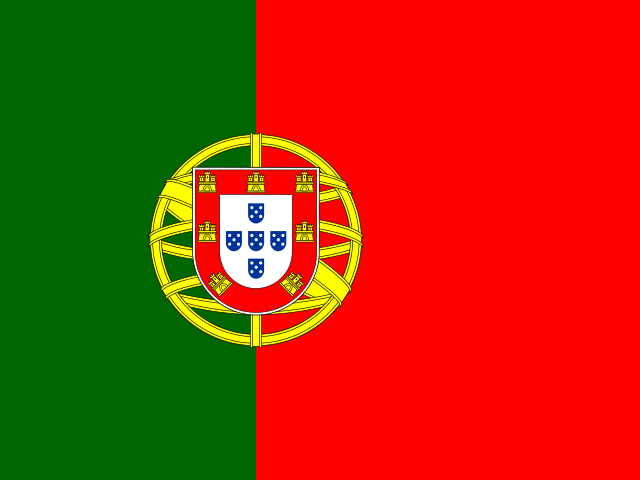
Today’s flag was born of the revolution of 5 October 1910. According to the Presidency of the Republic, green and red go back to the movement of 31 January 1891 and were used on 5 October by Machado Santos at the Rotunda and then at the barracks and on top of São Jorge Castle, still with the red at the hoist. The flag was approved by the Provisional Government on 29 November 1910 and sanctioned by the Constituent National Assembly on 19 June 1911. The story is told in the guide to flag symbolism.
1 December, the festival of the flag
According to the Museum of the Presidency of the Republic, in 1910 the Provisional Government gave the 1 December holiday a new meaning by establishing the Festival of the Flag on that date. The organisation of the celebrations, the Republic’s first great civic festival, was entrusted to the Lisbon City Council, and it consecrated the new national flag only two days after its approval.
10 June
The Day of Portugal, Camões and the Portuguese Communities is marked with official ceremonies presided over by the President of the Republic, in a different city each year. On days of official ceremonies, Decreto-Lei n.º 150/87 provides for the flag to be flown where the events take place, in addition to public buildings across the country.
Regional and municipal holidays
- Azores: The Day of the Autonomous Region of the Azores is Whit Monday. Decreto Regulamentar Regional n.º 13/79/A provides for the Azorean flag to be flown on Sundays and holidays, always with the national flag on public buildings.
- Madeira: Madeira celebrates Autonomy Day on 2 April, the Day of the Region on 1 July and the Primeira Oitava on 26 December. Decreto Legislativo Regional n.º 17/2024/M explains that 1 July recalls the discovery of the island and 2 April the recognition of autonomy in the Constitution of 1976.
- Municipal holiday: Each municipality has a municipal holiday, optional under article 235 of the Labour Code. The câmaras municipais often hold formal sessions on that day, with the municipal flag beside the national flag.
Flying hours on holidays
On holidays the hours of article 6 of Decreto-Lei n.º 150/87 apply: the flag flies between 9.00 and sunset. If it stays up at night, the decree provides for it to be lit by floodlights whenever possible. In the Azores, on gala holidays, the regional flag stays up until midnight on buildings that are lit. Lighting is covered in the guide to flag lighting.
Family celebrations and other occasions
The decree allows private institutions and individuals to fly the flag on other days, provided they respect the legal and protocol procedures, for example at a family celebration or an opening. The general rules are in the guide to flag rules.
Frequently asked questions
Is the flag flown on every public holiday in Portugal?
Under Decreto-Lei n.º 150/87, the national flag is flown on Sundays and public holidays on public buildings and on the headquarters of public institutes and companies. The decree makes no distinction between civic and religious holidays.
Why is 1 December linked to the flag?
According to the Museum of the Presidency of the Republic, the Provisional Government gave the 1 December holiday a new meaning in 1910 by establishing the Festival of the Flag on that date. It was the Republic’s first great civic celebration and consecrated the new green and red flag.
Is the municipal holiday a flag day?
The municipal holiday is an optional holiday under article 235 of the Labour Code, and each municipality has its own date. It is a day of official ceremonies in the municipality, and on such days Decreto-Lei n.º 150/87 provides for the flag to be flown where the events take place.
Can the flag stay up at night on holidays?
Yes. Decreto-Lei n.º 150/87 provides that when the national flag stays up during the night it is lit by floodlights whenever possible. In the Azores, the regional flag stays up until midnight on gala holidays on buildings that are lit.
Sources
This guide is based on the following sources, most of them in Portuguese:
- Código do Trabalho (artigos 234.º a 236.º) – Diário da República
- Decreto-Lei n.º 150/87, de 30 de março (uso da Bandeira Nacional) – Presidência da República
- Bandeira Nacional – Museu da Presidência da República
- Bandeira Nacional – Presidência da República
- Decreto Legislativo Regional n.º 17/2024/M, de 16 de dezembro – Diário da República
- Decreto Regulamentar Regional n.º 13/79/A, de 18 de maio – Diário da República
Related guides
- Flag daysWhen the national flag is flown in Portugal: Sundays, the national and regional holidays of 2026 and 2027, official ceremonies and days set by the Government.
- Flag rulesThe rules for the Portuguese national flag: who may fly it, flying hours from 9.00 to sunset, lighting, good condition, place of honour and legal protection.
- Flag symbolismThe meaning of the Portuguese flag: green and red according to the 1910 commission, the armillary sphere, the quinas, the seven castles and official colours.
- Flag lightingThe flag flown at night in Portugal: what Decreto-Lei n.º 150/87 provides on floodlights, the Azores rule for gala holidays and the usual lighting solutions.