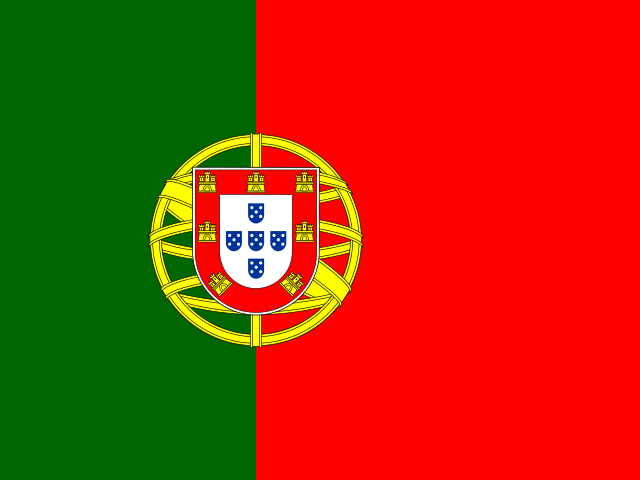
Flying the flag at half-mast in Portugal
Published Written by Flagpole Guides
This page is an English translation of the Portuguese original. Where the two versions differ, the Portuguese text is the original.
A flag at half-mast is the visible sign of mourning. In Portugal, Decreto-Lei n.º 150/87 links half-mast to national mourning, declared by the Government, and describes how the flag is raised and lowered in that case. This guide explains the rule and the practice. The circumstances in which national mourning is declared are covered in the guide to national mourning.
What the decree says
Article 7 of Decreto-Lei n.º 150/87 has three paragraphs:
- When national mourning is declared, the national flag is flown at half-mast for the number of days set.
- Whenever the national flag is at half-mast, any other flag flown with it is flown in the same way.
- To fly at half-mast, the flag goes to the top before being lowered to half-mast, and the same procedure is followed when it is taken down.
The decree uses the expressions "meia haste" and "meia adriça" with the same meaning: the flag is halfway between the top and the foot of the pole.
Raising and lowering at half-mast
| Moment | Procedure under article 7 |
|---|---|
| In the morning | The flag goes up to the top of the pole and then down to half-mast |
| During the day | The flag stays at half-mast |
| At sunset | The flag goes up to the top again and only then is taken down |
The decree does not set the exact height of half-mast. In practice the flag is roughly in the middle of the pole, and on a tall pole half-mast is clearly below the top. On an angled façade pole, where there is no room to lower the flag, the decree’s rules are hard to apply, which explains why many institutions have vertical poles. The relationship between the pole and the flag is covered in the guide to flagpole heights.
Several flags during national mourning
During national mourning, all the flags flown beside the national flag are at half-mast: the European Union flag, the regional flag, the municipal flag and others. The memorandum on flags of the Câmara Municipal do Sabugal illustrates the rule with three poles, all at half-mast. The order of the flags stays the same, as described in the guide to flag protocol.
Municipal mourning
Besides national mourning, the câmaras municipais sometimes declare municipal mourning, for example on the death of a local figure. According to the Sabugal memorandum, during municipal mourning only the municipality’s flag is flown at half-mast for the number of days set, while the national flag and the European Union flag stay at the top.
Half-mast outside official mourning
Decreto-Lei n.º 150/87 only provides for half-mast during national mourning. A private individual who flies the flag in their garden can, as a mark of respect, set it at half-mast during national mourning. Outside those situations, half-mast is sometimes used at family funerals, by associations or by companies, but the law does not regulate it. Under article 2 of the decree, the flag is in any case displayed in good condition and according to the official pattern.
Duration
The duration depends on the decree declaring national mourning. Under Lei n.º 40/2006, the Government declares national mourning, its duration and its scope by decree. In 2025, for example, the Government declared three days of national mourning for Pope Francis and two days on the death of Francisco Pinto de Balsemão. The examples are in the guide to national mourning.
Frequently asked questions
When is the flag flown at half-mast in Portugal?
Under article 7 of Decreto-Lei n.º 150/87, the national flag is flown at half-mast when national mourning is declared, for the number of days set. National mourning is declared by the Government by decree.
How is the flag set at half-mast?
The decree provides that, to fly at half-mast, the flag goes to the top before being lowered to half-mast. The same procedure is repeated when it is taken down: the flag first goes up to the top of the pole and only then comes down.
Do the other flags also fly at half-mast?
Yes, during national mourning. Article 7 provides that whenever the national flag is at half-mast, any other flag flown with it is flown in the same way.
What is municipal mourning?
Municipal mourning is declared by the câmara municipal. According to the memorandum on flags of the Câmara Municipal do Sabugal, in that case only the municipality’s flag is flown at half-mast for the number of days set, while the national flag stays at the top.
Sources
This guide is based on the following sources, most of them in Portuguese:
- Decreto-Lei n.º 150/87, de 30 de março (uso da Bandeira Nacional) – Presidência da República
- Lei n.º 40/2006, de 25 de agosto (Lei das Precedências do Protocolo do Estado Português) – Diário da República
- Memorando: colocação de bandeiras – Câmara Municipal do Sabugal
- Símbolos Nacionais – Presidência da República
Related guides
- National mourningNational mourning in Portugal: who declares it, in which cases, how long it lasts, what changes for the flag and events, and how municipal mourning differs.
- Flag rulesThe rules for the Portuguese national flag: who may fly it, flying hours from 9.00 to sunset, lighting, good condition, place of honour and legal protection.
- Flag protocolFlag protocol in Portugal: the place of honour of the national flag with two, three or more poles, and the European, regional and municipal flags.
- Flagpole heightsFlagpole heights in Portugal: usual heights for houses, businesses and public buildings, the relationship with the flag, half-mast and municipal permits.