Flagpoles for businesses in Spain: flags and advertising
Published Written by Flagpole Guides
This page is an English translation of the Spanish original. Where the two versions differ, the Spanish text is the original.
Hotels, car dealers, industrial estates, corporate headquarters and petrol stations: in Spain, many businesses have a row of flagpoles in front of their premises, with the flags of Spain, the region, Europe and the company, or with advertising flags. For a business, a flagpole is both part of its image and an installation subject to rules on symbols, planning and advertising. This guide summarises them.
The flag of Spain and the corporate flag
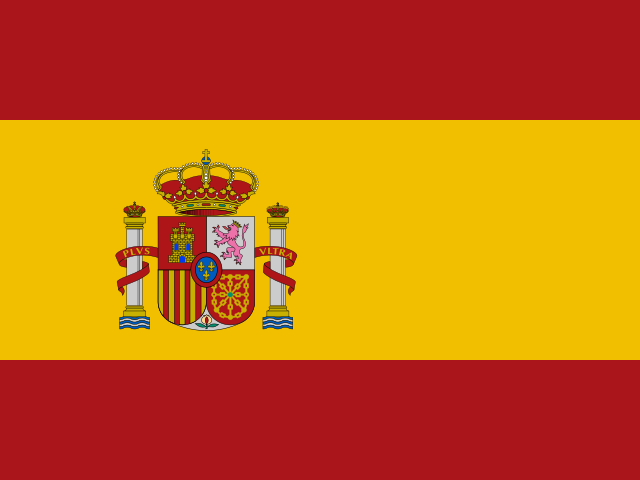
Law 39/1981 does not oblige businesses to fly the flag of Spain, but when they do, two articles apply:
- Article 6: when the flag of Spain is used, it always takes a prominent, visible place of honour. Next to other flags it takes the pre-eminent place, and the others may not be larger. With an odd number of flags it is the centre; with an even number, of the two central positions, the left as seen from outside.
- Article 8: it is prohibited to use the symbols or initials of political parties, trade unions, associations or private entities on the flag of Spain. The corporate flag flies next to the flag of Spain, never on it.
The guide to flag protocol explains the order in more detail.
Advertising flags
Flags with a logo or advertising message are outdoor advertising, and in many communities and municipalities they have their own procedure. In the Community of Madrid, article 155 of Law 9/2001 expressly lists the placing of hoardings, signs and other outdoor advertising visible from the public highway among the works subject to a responsible planning declaration. Many councils also have outdoor advertising bylaws with rules on size, location and lighting.
Beside roads
Outside the urban sections of State roads, article 37 of Roads Law 37/2015 prohibits advertising anywhere visible from the carriageway and, in general, any notice that may catch the attention of drivers. The prohibition applies to all signs, posters, inscriptions, shapes, logos or images, whatever their support, and gives no right to compensation. It therefore also covers advertising flags visible from a State road outside the urban sections. Regional and provincial roads are governed by their own laws.
The flagpole
According to ClickBanderas, the fibreglass flagpole with a rotating arm is the most widely used option for outdoor advertising with customised flags, because its arm keeps the flag extended at all times and the message always visible. Aluminium flagpoles, up to 16 metres, are used for great heights and for institutional or advertising flags in landscape format. The same maker associates 6-metre flagpoles with company façades and industrial estates, 8-metre ones with large stores, hotels and corporate headquarters, and 10-metre ones with industrial buildings and institutional headquarters. The guide to types of flagpoles compares the systems.
With a rotating arm, the flag cannot fly at half-mast. If the business wishes to join in official mourning, a halyard flagpole makes that possible.
Paperwork and costs
A fixed flagpole is building work: depending on the autonomous community and the municipality, it requires planning permission, a responsible declaration or no authorisation, and may be subject to the Tax on Constructions, Installations and Works and a council fee. The guide to flagpole installation covers this paperwork, historic heritage and aviation easements.
Wind and lighting
A row of flagpoles with large flags carries a considerable wind load. ClickBanderas links the configuration to the wind zones of the Building Technical Code and, for the windy zones, gives reinforced flagpoles or smaller flags. If the flags fly at night, the lighting is subject to the rules on outdoor lighting and, in some places, light pollution; the guide to flag lighting covers them.
Frequently asked questions
May a business put its logo on the flag of Spain?
No. Article 8 of Law 39/1981 prohibits the use of the symbols or initials of political parties, trade unions, associations or private entities on the flag of Spain. A business may raise its corporate flag next to the flag of Spain, but as a separate flag.
Where does the flag of Spain go next to a company’s flags?
Under article 6 of Law 39/1981, when the flag of Spain is used it always takes a prominent, visible place of honour; next to other flags, the pre-eminent place, and the others may not be larger. With an odd number of flags it is the centre; with an even number, the left-hand central position as seen from outside.
Does an advertising flag need permission?
It depends on the autonomous community and the municipality. In the Community of Madrid, article 155 of Law 9/2001 subjects the placing of hoardings, signs and other outdoor advertising visible from the public highway to a responsible planning declaration. Many councils also have outdoor advertising bylaws.
May advertising flags be put up beside a road?
Outside the urban sections of State roads, no. Under article 37 of Roads Law 37/2015, advertising anywhere visible from the carriageway is prohibited, and the prohibition applies to signs, logos or images, whatever their support. Regional and provincial roads have their own laws.
Which flagpole do businesses use?
According to ClickBanderas, the fibreglass flagpole with a rotating arm is the most widely used option for outdoor advertising with customised flags, because it keeps the flag extended at all times. Aluminium is used for great heights and for institutional or advertising flags in landscape format.
Sources
This guide is based on the following sources, most of them in Spanish:
- Ley 39/1981, de 28 de octubre, por la que se regula el uso de la bandera de España y el de otras banderas y enseñas – Boletín Oficial del Estado
- Ley 9/2001, de 17 de julio, del Suelo, de la Comunidad de Madrid (artículo 155) – Boletín Oficial del Estado
- Ley 37/2015, de 29 de septiembre, de carreteras (artículo 37) – Boletín Oficial del Estado
- Real Decreto Legislativo 2/2004, de 5 de marzo, por el que se aprueba el texto refundido de la Ley Reguladora de las Haciendas Locales (artículo 100) – Boletín Oficial del Estado
- Mástiles para banderas – ClickBanderas
- Cómo calcular el tamaño de mástil correcto para tu bandera – ClickBanderas
Related guides
- Flagpole installationInstalling a flagpole in Spain: planning permission or a responsible declaration by region, historic heritage, airports, owners’ associations and foundations.
- Flag protocolThe order of flags in Spain under Law 39/1981: the place of honour with odd and even numbers of flags, regional and municipal flags, indoors and at events.
- Types of flagpolesThe types of flagpoles in Spain: external halyard, internal halyard, rotating arm, balcony poles, indoor staffs and portable flagpoles.
- Flag lightingThe flag at night in Spain: raising times, spotlights and lights, the outdoor lighting regulation and the laws against light pollution.