Buying a flag: price, size and quality
Published Written by Flagpole Guides
A Union Flag can cost very different amounts, even at the same size. The difference often shows only after some time in the wind: in how quickly the colours fade and how long the edges last. This guide does not list prices, as they vary between makers and retailers and change over time. Instead it explains what affects the price of a flag, what a correctly made Union Flag looks like and what rights apply when buying one.
What affects the price of a flag?
| Factor | How it affects the price |
|---|---|
| Size | A larger flag needs more fabric and more finishing |
| Fabric | The weight and weave of the fabric affect both price and durability |
| Sewn or printed | A sewn flag, assembled from separate pieces, takes more work than a printed one |
| Edges and fly | Reinforced hems and extra stitching at the fly end take more work |
| Fittings | Rope and toggle, clips or eyelets vary between models |
| Proportions | 3:5 and 1:2 flags of the same length differ in the amount of fabric |
| Custom design | Flags with a logo or special design are usually made to order |
Flag price and size
Size is usually the biggest single factor in the price. The right size depends on the flagpole. As a guide, the Flag Institute gives a flag length of no more than one third of the height of a ground-level flagpole; a pole on top of a building may need a larger flag.
| Pole height | Maximum flag length |
|---|---|
| 4.6 m | about 153 cm |
| 6 m | about 200 cm |
| 8 m | about 267 cm |
| 10 m | about 333 cm |
The flag size calculator works out the size for any height, and more tables are in the guide to flag sizes. A flag that is too large catches more wind and loads the pole more.
Fabric, sewing and printing
Most flags for outdoor use today are made of synthetic fabric. Between flags there are still differences in weight, weave and colourfastness. Some things that commonly affect both the price and how long a flag lasts:
- Sewn or printed: a sewn Union Flag is assembled from separate pieces of fabric for the crosses and background; on a printed flag, the colours are printed onto the fabric.
- Reinforced fly: the free end wears most in the wind and is reinforced with extra stitching on some flags.
- Colourfastness: colours that resist UV light fade more slowly.
A flag flown every day wears out faster than one flown only on special days, which affects how often a new flag is needed.
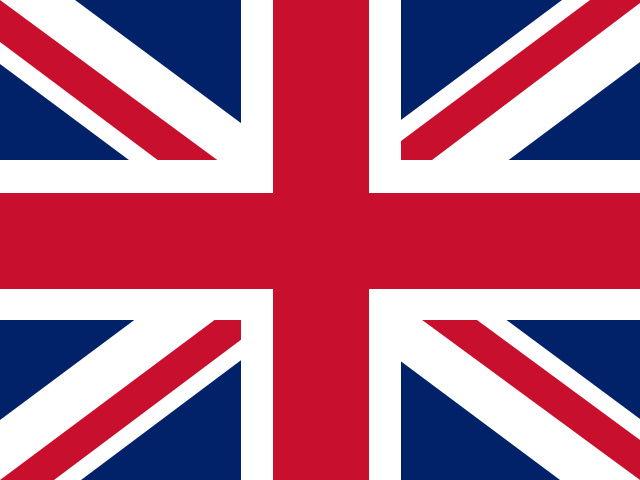
A correctly made Union Flag
It can help to know what a correct Union Flag looks like:
- Proportions: according to the Flag Institute, 3:5 is normal for use on land and 1:2 customary for ensigns at sea.
- Design: three crosses on royal blue, with the broader white diagonal uppermost at the hoist, nearest the pole.
- Colours: the Flag Institute recommends Pantone 280 C for blue and 186 C for red. As the flag has no basis in law, there are no legally defined colours.
- Royal flags: the Royal Standard is flown only while the royal person is on the premises and is not a flag for private use.
More about the design is in the guide to the Union Flag, and about other flags in the guide to flag types.
Planning rules for the flag
In England, the government’s plain English guide lists flags that can be flown from a flagpole without advertisement consent, including any country’s national flag and county flags. Company and club flags can be flown without consent subject to restrictions. Following Brexit, the EU flag is no longer on the list of flags that need no consent in England. More in the guide to flag flying rules.
Your rights when buying
- Cancellation: under the Consumer Contracts Regulations 2013, for goods bought at a distance from a trader, such as online, the cancellation period generally ends 14 days after the goods come into the consumer’s physical possession. The right does not apply to goods made to the consumer’s specifications or clearly personalised, such as a flag with a custom logo.
- Faulty goods: under the Consumer Rights Act 2015, the short-term right to reject faulty goods generally lasts 30 days. A fault that appears within six months of delivery is taken to have been there on delivery, unless it is shown otherwise.
When the flag is worn out
According to the Flag Institute, national flags are never flown worn, damaged or soiled, and a tattered or faded flag is destroyed in a dignified way, for example by burning, tearing or cutting into strips that no longer resemble the original flag. Those who also need a new pole can find more in the guide to buying a flagpole.
Frequently asked questions
What affects the price of a flag?
The price of a flag depends mainly on its size, the quality of the fabric, whether the design is sewn or printed, how the edges and fly end are finished and how the flag attaches to the halyard. Flags with a custom logo or design are usually made to order and priced separately.
What size Union Flag suits my flagpole?
As a guide, the Flag Institute gives a flag length of no more than one third of the height of a ground-level flagpole. For a 6 metre pole that is up to about 2 metres long. The flag size calculator works it out for any height.
Can I return a flag bought online?
Under the Consumer Contracts Regulations 2013, a consumer buying goods at a distance from a trader generally has a cancellation period ending 14 days after the goods come into their physical possession. The right does not apply to goods made to the consumer’s specifications or clearly personalised, such as a flag with a custom logo.
What can I do if a new flag is faulty?
Under the Consumer Rights Act 2015, goods have to conform to the contract. The short-term right to reject faulty goods generally lasts 30 days, and a fault that appears within six months of delivery is taken to have been there on delivery unless shown otherwise.
Why are no prices listed here?
Prices differ between makers and retailers and change over time. This guide explains what affects the price, which makes it easier to compare offers on the same basis.
Sources
This guide is based on the following sources:
- UK flag protocol – The Flag Institute
- Union Flag specification – The Flag Institute
- The Consumer Contracts (Information, Cancellation and Additional Charges) Regulations 2013, regulations 28 and 30 – legislation.gov.uk
- Consumer Rights Act 2015, sections 19 and 22 – legislation.gov.uk
- Flying flags: a plain English guide – Ministry of Housing, Communities and Local Government
Related guides
- Flag sizesWhat size flag suits a flagpole: the Flag Institute’s one-third guide, a size chart by pole height, the 3:5 and 1:2 proportions and UK planning limits.
- Flag size calculatorThe flag size calculator shows the largest flag for a flagpole by the Flag Institute’s one-third guide, in centimetres and feet, at 3:5 and 1:2 proportions.
- Flag typesThe flags flown in the UK: the Union Flag, the national flags of England, Scotland and Wales, ensigns, the Royal Standard, county and house flags and pennants.
- The Union FlagWhat the crosses of the Union Flag stand for, how it developed from 1606 to 1801, why it has no basis in law, its colours and proportions, and the right way up.
- Buying a flagpoleBuying a flagpole in the UK: what affects the price – height, material, halyard, base, delivery and installation – plus planning rules and your consumer rights.
- Flag flying rulesUK flag flying rules and etiquette: who may fly which flag, flying times, flying at night, the right way up for the Union Flag and retiring worn-out flags.