Flagpole accessories – every part explained
Published Written by Flagpole Guides
A flagpole is more than a tube. The pulley, halyard, cleat and base decide whether the flag is easy to hoist, whether it flies cleanly in the wind and whether the pole still stands safely after years. The names vary a little between suppliers; the overview below uses the common terms.
Overview of the parts
| Part | What it does |
|---|---|
| Finial | decorative top, such as a ball or crown |
| Truck (top fitting) | carries the pulley, often rotating |
| Pulley | guides the halyard at the top |
| Halyard | the rope that raises and holds the flag |
| Clips, or toggle and rope | attach the flag to the halyard |
| Cleat | fitting near the base on which the halyard is secured |
| Internal halyard door | lockable access to the halyard inside the pole |
| Counterweight | keeps an internal halyard taut |
| Yardarm and gaff | cross-piece and angled spar on nautical poles |
| Ground socket | tube set in the foundation into which the pole fits |
| Hinged base | allows the pole to be lowered |
| Foundation | concrete foundation to the manufacturer’s specification |
Top fitting, pulley and finial
At the top of the pole sits the truck, which closes the tube and carries the pulley. Many are designed to rotate, so the flag can turn with the wind without wrapping around the pole. A finial, such as a ball, often crowns the pole. The top is the part hardest to reach without lowering the pole; repairs there are described in the guide to flagpole repair.
Halyard and fittings
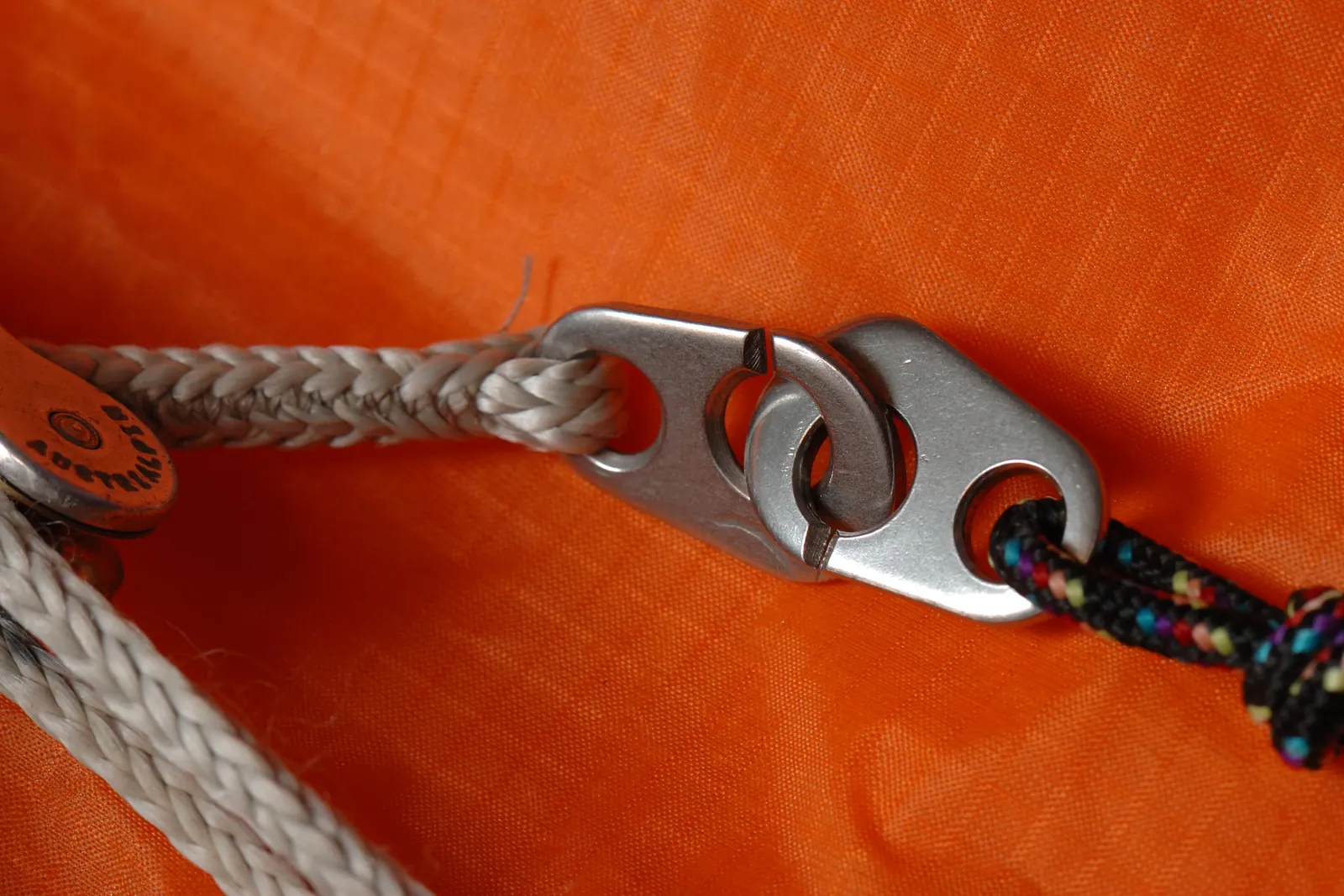
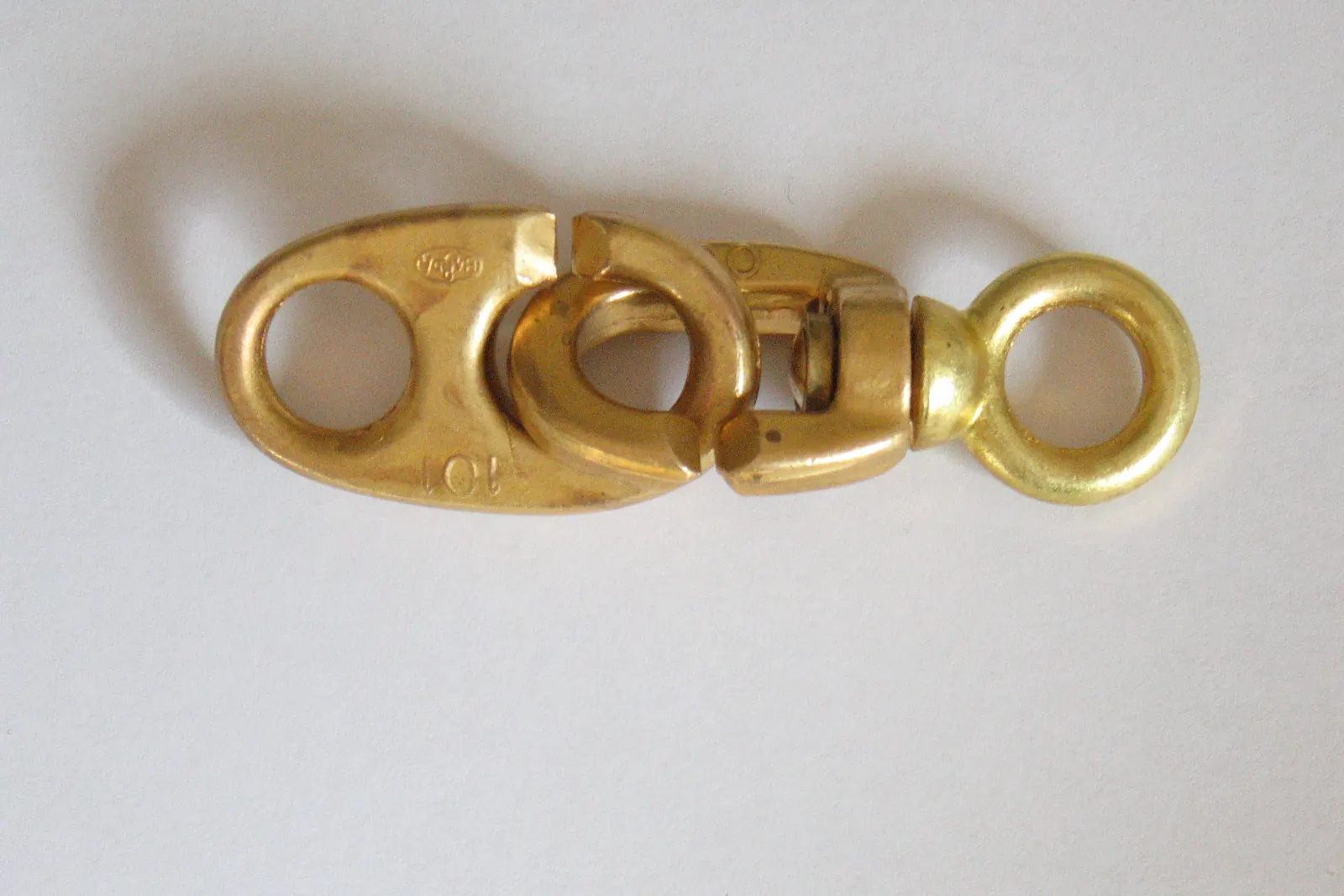
The halyard usually runs in a loop over the pulley. The flag is attached with clips, or with a toggle and rope sewn into the hoist of the flag. The Flag Institute mentions ropes, toggles and clips as the usual fittings of a flag. Plastic or covered clips make less noise against the pole than bare metal clips.
The Flag Institute also describes the British tradition of breaking a flag: the flag is hoisted rolled up and secured with a thin piece of cotton or a slip knot, and a sharp tug on the halyard releases it.
Cleat and internal halyard
With an external halyard, the rope is secured on a cleat. With an internal halyard, it sits behind a lockable door and a counterweight inside the pole keeps it taut, which makes it harder to lower or steal the flag.
Yardarm and gaff
Nautical flagpoles have a yardarm, a horizontal cross-piece, and sometimes a gaff, a short spar at an angle. According to the Flag Institute, the senior ensign flies from the gaff and the senior national flag from the starboard yardarm; a yacht club burgee can fly from the masthead.
Base and foundation
The pole stands in a foundation, usually concrete. It holds either a ground socket, into which the pole slides, or a hinged base, which allows the pole to be lowered. A hinged pole makes it possible to reach the top from the ground. The size of the foundation is set by the manufacturer according to the pole’s height, the flag size and the site. More in the guide to installing a flagpole.
Pennant and mourning cravat
- Pennant: according to the Flag Institute, a long, narrow streamer designed to be left flying day and night, so the pole does not stand bare.
- Mourning cravat: a black cravat or ribbon added at the top of the flag at the hoist when half-masting is unsuitable. In England, the planning rules allow a black mourning ribbon on the flag or flagpole where the flag cannot be flown at half-mast.
Lighting
Floodlights at the base of the pole or in the ground light the flag at night. According to the Flag Institute, flags may be flown at night when illuminated. In England, electrical installation work in homes falls under Part P of the Building Regulations, and Approved Document P explains when work has to be notified. More in the guide to flag lighting.
Frequently asked questions
What parts does a flagpole have?
A typical flagpole has the pole itself, a top fitting with a pulley, sometimes called the truck, often with a decorative finial, a halyard with clips or a toggle and rope for the flag, a cleat to secure the halyard, and a base such as a ground socket or a hinged base set in a foundation.
How is a flag attached to the halyard?
Flags are attached to the halyard with clips, or with a toggle and rope sewn into the flag’s hoist. The Flag Institute mentions ropes, toggles and clips as the usual fittings of a flag.
What is a mourning cravat?
A mourning cravat is a black ribbon or cravat added to the top of the flag at the hoist when a flag cannot be flown at half-mast. According to the Flag Institute, it is used when half-masting is unsuitable, for example on poles more than 45° from the vertical.
Does flagpole lighting need an electrician?
In England, electrical installation work in homes falls under Part P of the Building Regulations. Approved Document P explains when work has to be notified to building control. Solar lights that are not connected to the mains are not part of the fixed installation.
Sources
This guide is based on the following sources:
- UK flag protocol – The Flag Institute
- Electrical safety: Approved Document P – Ministry of Housing, Communities and Local Government
- Flying flags: a plain English guide – Ministry of Housing, Communities and Local Government
Related guides
- How a flagpole worksHow a flagpole works: external and internal halyards, the pulley and rotating truck, yardarms, hinged bases and the forces the wind puts on pole and foundation.
- Flagpole maintenanceWhat is usually checked when a flagpole is maintained – pole, foundation, halyard, pulley and flag – why upkeep matters for liability, and retiring old flags.
- Flagpole repairBroken halyard, jammed pulley, rattling clips, a leaning pole or cracks at the base: common flagpole faults, their causes and who usually deals with them.
- Flag lightingFlying a flag at night in the UK: what flag protocol says about illumination, light as a statutory nuisance, and electrical rules for fixed floodlights.