Flagpole materials: aluminium, glass fibre, steel or wood?
Published Written by Flagpole Guides
The material decides how heavy a flagpole is, how it ages, how much maintenance it needs and how it behaves in a storm. There is no specific legal rule on flagpole materials in the UK. What the law does require is that premises are reasonably safe for the people who visit them, which includes a flagpole that could fall or shed parts.
The materials compared
| Material | Strengths | Points to consider |
|---|---|---|
| Aluminium | light, corrosion-resistant, low maintenance | conducts electricity, surface can be scratched |
| Glass fibre (fibreglass) | light, flexible, conducts little when dry | surface can weather over the years |
| Steel, galvanised | very strong, suited to tall poles | heavy, needs intact corrosion protection, conducts electricity |
| Wood | traditional appearance | needs regular painting, can rot at the base |
Aluminium
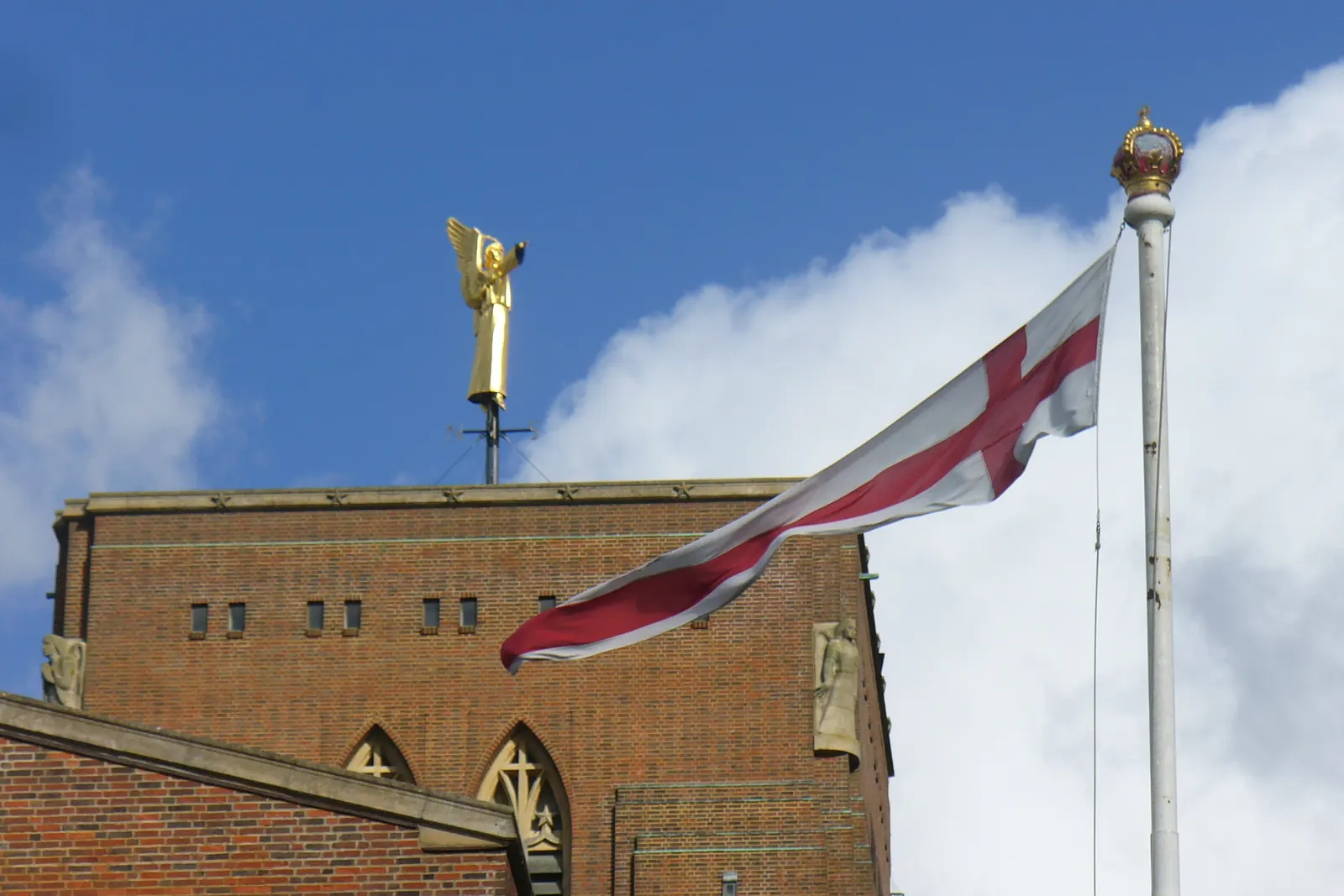
Aluminium is a common material for flagpoles in gardens, at businesses and on public buildings. Poles are often tapered, thicker at the base than at the top, or cylindrical. The surface is often anodised or powder-coated, typically in white or silver. Aluminium does not rust; it forms a thin grey oxide layer that protects it.
Glass fibre
Glass fibre poles are light and bend more in the wind than aluminium poles without breaking. They conduct very little electricity when dry. That does not make them safe near overhead lines: moisture and dirt can make the surface conductive. Over the years, UV light can make the surface dull and rough.
Steel
Steel poles are used mainly where great heights and large flags create high forces. They are usually galvanised and often also painted or coated. Without intact corrosion protection, steel rusts, especially at the base and where the coating is damaged. Its weight affects the foundation, transport and the equipment needed to raise the pole.
Wood
Wooden flagpoles are rare today and are chosen mostly for their traditional appearance. They need regular care, because moisture at the base and in cracks can lead to rot.
What the law says about safety
- Occupiers’ liability: under section 2 of the Occupiers’ Liability Act 1957, the occupier of premises owes visitors the “common duty of care”, a duty to take such care as is reasonable to see that the visitor will be reasonably safe.
- Manufacturer’s specification: in practice, manufacturers state which wind loads and flag sizes a pole is designed for, and how large the foundation is.
- Planning: the material does not change the planning rules. According to the Planning Portal, one garden flagpole up to 4.6 metres needs no planning permission.
More in the guide to flagpole safety.
Recycling
Aluminium and steel are metals that can be recycled. Glass fibre is harder to recycle. The local council runs recycling and waste collections and can advise where large items are accepted. More about how long a pole lasts is in the guide to flagpole lifespan, and about care in the guide to flagpole maintenance.
Frequently asked questions
What material are flagpoles in the UK usually made of?
Common materials are aluminium and glass fibre, also called fibreglass. Steel is used mainly for very tall or heavily loaded poles, and wooden flagpoles are rare today.
Does an aluminium flagpole conduct electricity?
Yes. Aluminium and steel conduct electricity. Glass fibre conducts very little when dry, but can become conductive when wet or dirty. The distance to overhead power lines therefore matters for every material, especially when a pole is raised or lowered.
Is there a legal standard for flagpole materials?
There is no specific rule on flagpole materials. Under the Occupiers’ Liability Act 1957, the occupier of premises owes visitors a duty to take reasonable care that they will be reasonably safe, which includes a flagpole that could fall or shed parts.
How is an old flagpole recycled?
Aluminium and steel are metals that can be recycled; glass fibre is harder to recycle. The local council can advise on recycling and waste collections, including where large items are accepted.
Sources
This guide is based on the following sources:
- Occupiers’ Liability Act 1957, section 2 – legislation.gov.uk
- Recycling collections – UK government
- Can I put a flagpole in my garden and how tall can it be? – Planning Portal
Related guides
- Types of flagpolesGround-mounted, roof-mounted, wall-mounted, telescopic and nautical flagpoles with yardarm and gaff: the main types of flagpole and how UK planning treats them.
- Lifespan and sustainabilityWhat decides how long a flagpole and a flag last, the signs of wear, and how aluminium, glass fibre and flag fabric are recycled or disposed of.
- Flagpole maintenanceWhat is usually checked when a flagpole is maintained – pole, foundation, halyard, pulley and flag – why upkeep matters for liability, and retiring old flags.
- Flagpole safetyFlagpole safety in the UK: wind loads and weather warnings, occupiers’ liability, overhead lines, safe conditions for flags and the rules for work at height.