Half-mast in the UK – rules and procedure
Published Written by Flagpole Guides
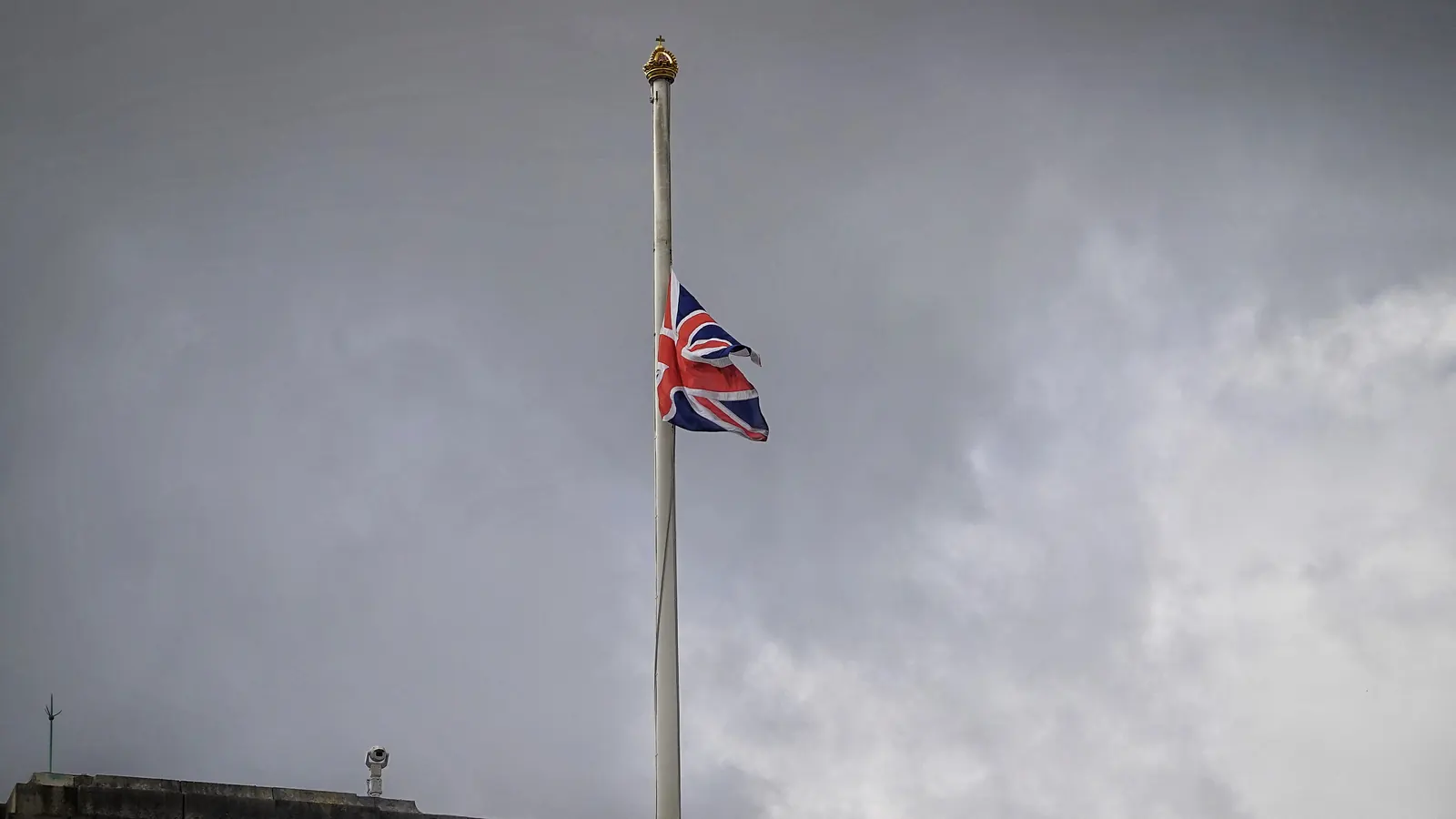
A flag at half-mast is the most visible sign of public mourning in the UK. There is no single law that describes how it is done, but the descriptions from the Scottish Government and the Flag Institute agree on the essentials, and in Northern Ireland the Flags Regulations (Northern Ireland) 2000 set out when government buildings fly the Union Flag at half-mast. Private flag owners are not bound by these rules, but can follow them.
How far down
According to the Scottish Government, half-mast actually means that the flag is flown two-thirds up the flagpole. The Flag Institute describes the same position and adds that there should be at least the height of the flag between the top of the flag and the top of the pole. On a short pole with a large flag, the second rule can mean the flag sits lower than two-thirds.
| Pole height | Two-thirds up the pole |
|---|---|
| 6 m | about 4 m |
| 7 m | about 4.7 m |
| 8 m | about 5.3 m |
| 10 m | about 6.7 m |
The procedure
The Flag Institute describes the following sequence:
- The flag is first raised all the way to the top of the mast.
- It stays there for a second.
- It is then lowered to the half-mast position.
- When the flag is taken down, it is raised to the top again for a second before being fully lowered.
Other flags at the same time
- Other flags on the same stand of poles are also at half-mast or are not flown at all, according to the Flag Institute.
- Flags of foreign nations are not flown unless their country is also observing mourning.
- Two flags on one pole: when flags are at half-mast, the lower flag is removed.
- The Royal Standard never flies at half-mast, because it represents the Monarchy, which is continuous.
When half-mast cannot be used
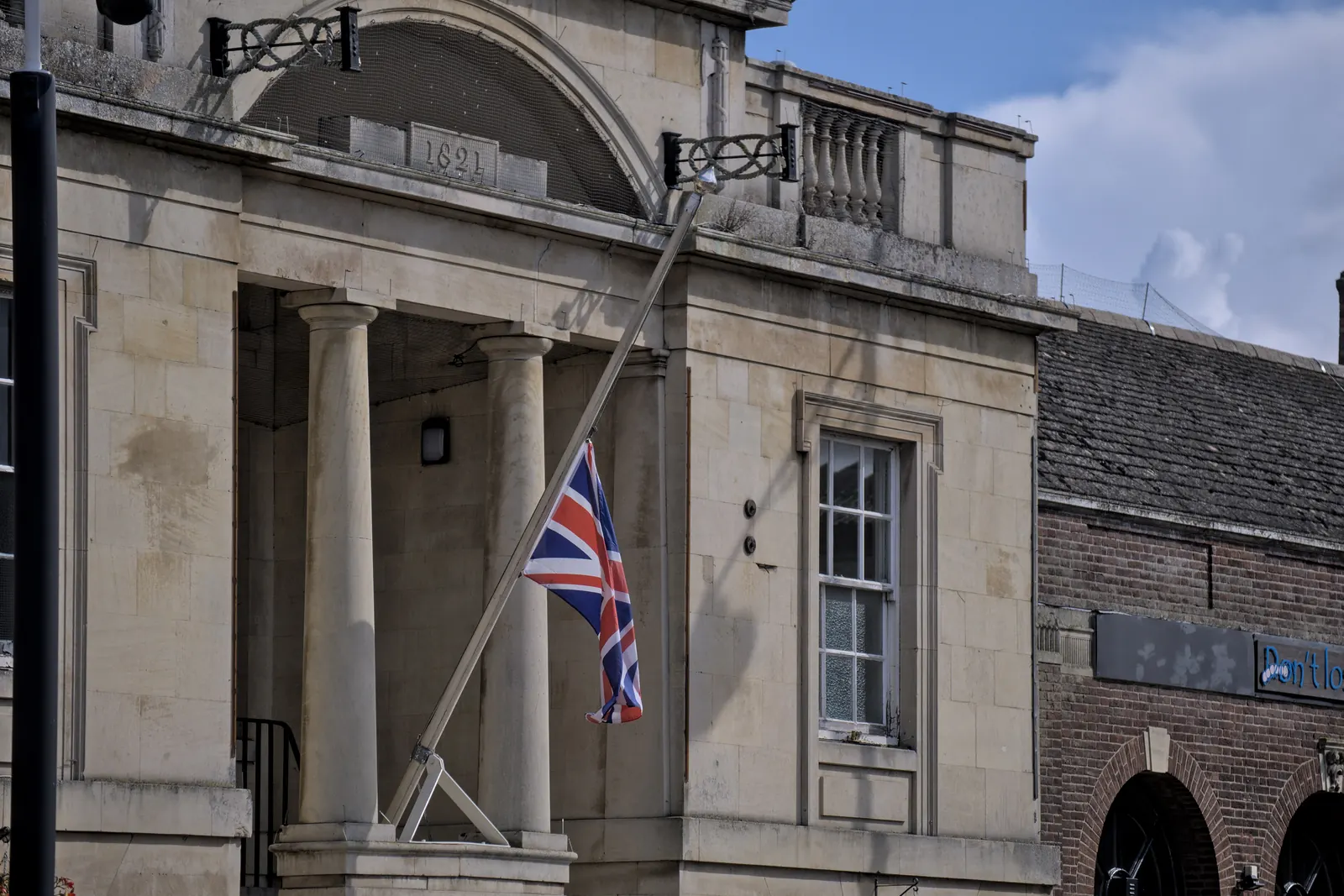
Flags cannot be flown at half-mast on poles that are more than 45° from the vertical, according to the Flag Institute. For these, a black cravat or ribbon is added to the top of the flag at the hoist. In England, the government’s plain English guide notes that the planning regulations allow a black mourning ribbon on the flag or flagpole where the flag cannot be flown at half-mast, for example on a flagpole projecting from the side of a building.
When flags fly at half-mast
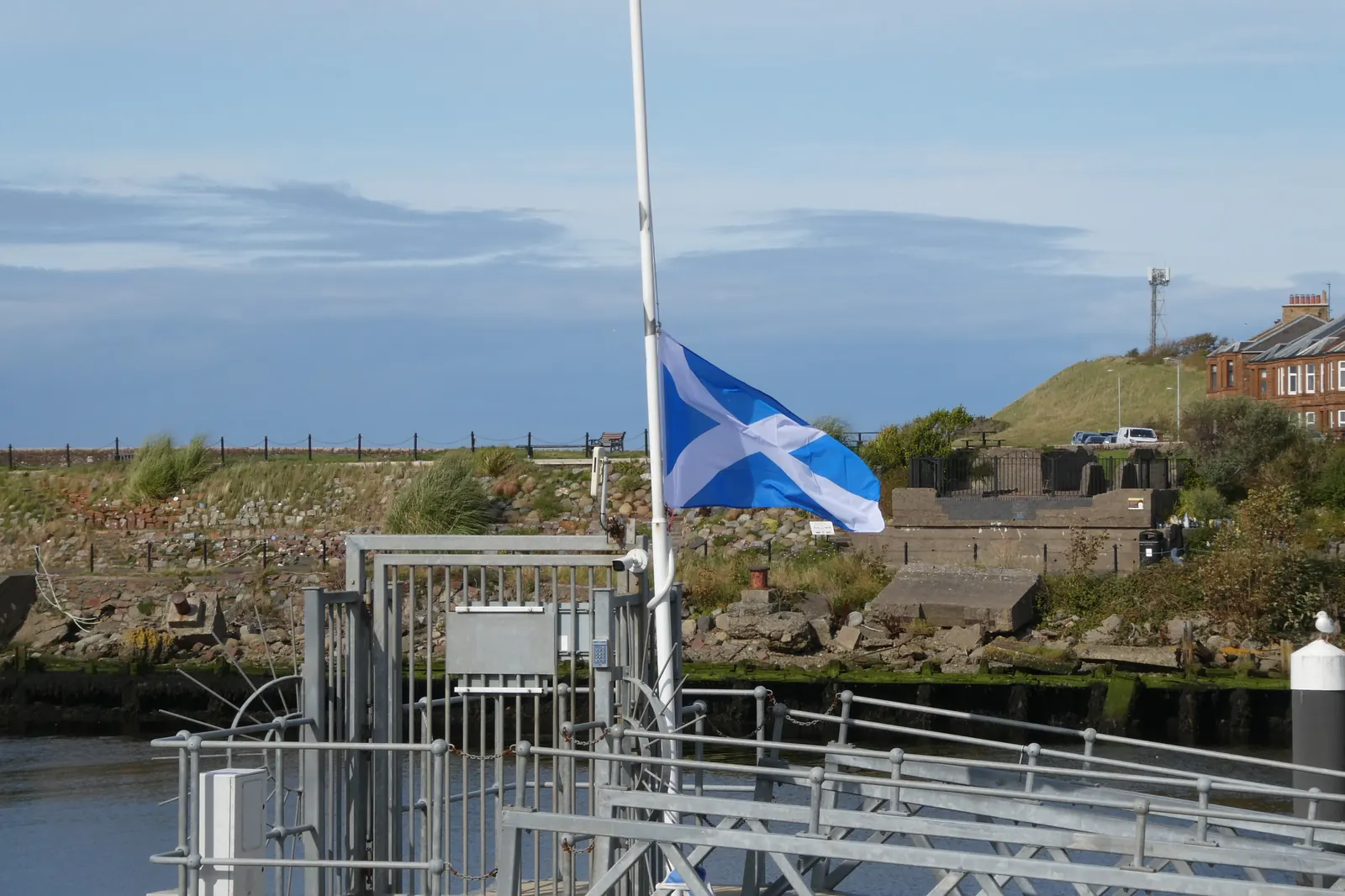
According to the Flag Institute, flags are flown at half-mast on occasions such as:
- from the announcement of the death until the funeral of the Sovereign, except on Proclamation Day, when flags fly at full mast following the proclamation
- for members of the Royal Family, subject to special commands from the Sovereign
- the funerals of foreign rulers, and of Prime Ministers and former Prime Ministers, subject to special commands
- the funerals of First Ministers and former First Ministers of Scotland, Wales and Northern Ireland, in their respective countries unless otherwise commanded
- any other occasion for which the Sovereign has given a special command.
The Flag Institute adds that flags may be flown at half-mast on private or non-government buildings on other relevant occasions, and that flags fly at full mast on Remembrance Sunday. The Scottish Government also lists International Workers’ Memorial Day on 28 April as a half-mast day for its buildings. More about mourning is in the guide to flags in mourning.
Half-mast on a private flagpole
There is no duty for private flag owners to follow a period of official mourning. Those who do can follow the same procedure. On poles with an external or internal halyard, the flag can be held at any height. How halyards work is explained in the guide to how a flagpole works.
Frequently asked questions
How far down is a flag at half-mast?
According to the Scottish Government’s flag guidance, half-mast actually means that the flag is flown two-thirds up the flagpole. The Flag Institute adds that there should be at least the height of the flag between the top of the flag and the top of the flagpole.
Why is the flag raised to the top before half-mast?
According to the Flag Institute, a flag to be flown at half-mast is first raised all the way to the top, left there for a second and then lowered to the half-mast position. When it is taken down, it is raised to the top again for a second before being fully lowered.
Who decides when flags fly at half-mast in the UK?
For UK government buildings, half-masting follows the Sovereign’s command and announcements from the government. In Northern Ireland, the Flags Regulations (NI) 2000 provide for half-mast following the death of a member of the Royal Family or a serving or former Prime Minister, on days notified in the Belfast Gazette. The Scottish Government lists its own occasions.
Does the Royal Standard fly at half-mast?
No. According to the Flag Institute, the Royal Standard never flies at half-mast, because it represents the Monarchy, which is continuous.
What if the flag cannot be lowered to half-mast?
According to the Flag Institute, a black cravat or ribbon can be added to the top of the flag at the hoist instead. The government’s plain English guide notes that a black mourning ribbon can be attached to the flag or flagpole where the flag cannot be flown at half-mast, for example on a pole projecting from a building.
Sources
This guide is based on the following sources:
- UK flag protocol – half-mast – The Flag Institute
- Flag flying on government buildings: guidance – Scottish Government
- Flying flags: a plain English guide – Ministry of Housing, Communities and Local Government
- The Flags Regulations (Northern Ireland) 2000 – legislation.gov.uk
Related guides
- Flags in mourningHow flags are used in mourning in the UK: national mourning, royal and state occasions, government announcements, a flag on a coffin and private bereavement.
- Flag flying rulesUK flag flying rules and etiquette: who may fly which flag, flying times, flying at night, the right way up for the Union Flag and retiring worn-out flags.
- Flag daysAll designated days for flying the Union Flag on UK government buildings in 2026 and 2027, with the separate rules for Scotland and Northern Ireland.
- How a flagpole worksHow a flagpole works: external and internal halyards, the pulley and rotating truck, yardarms, hinged bases and the forces the wind puts on pole and foundation.