Flagpole safety: wind, liability and working at height
Published Written by Flagpole Guides
A flagpole is a tall, slender structure that has to withstand wind and weather for years. If it breaks or sheds a part, it can injure people and damage houses, cars or fences, and work at the top of a pole carries its own risks. There is no specific law for flagpoles in the UK, but several general rules apply.
What the law says
- Occupiers’ liability: under section 2 of the Occupiers’ Liability Act 1957, the occupier of premises owes visitors the “common duty of care”: to take such care as in all the circumstances is reasonable to see that the visitor will be reasonably safe.
- Flags in England: the government’s plain English guide requires all flags to be kept in a safe condition, and not to obscure or hinder official road, rail, waterway or aircraft signs.
- Work at height: for employers, the Work at Height Regulations 2005 aim to prevent death and injury from a fall from height.
Wind
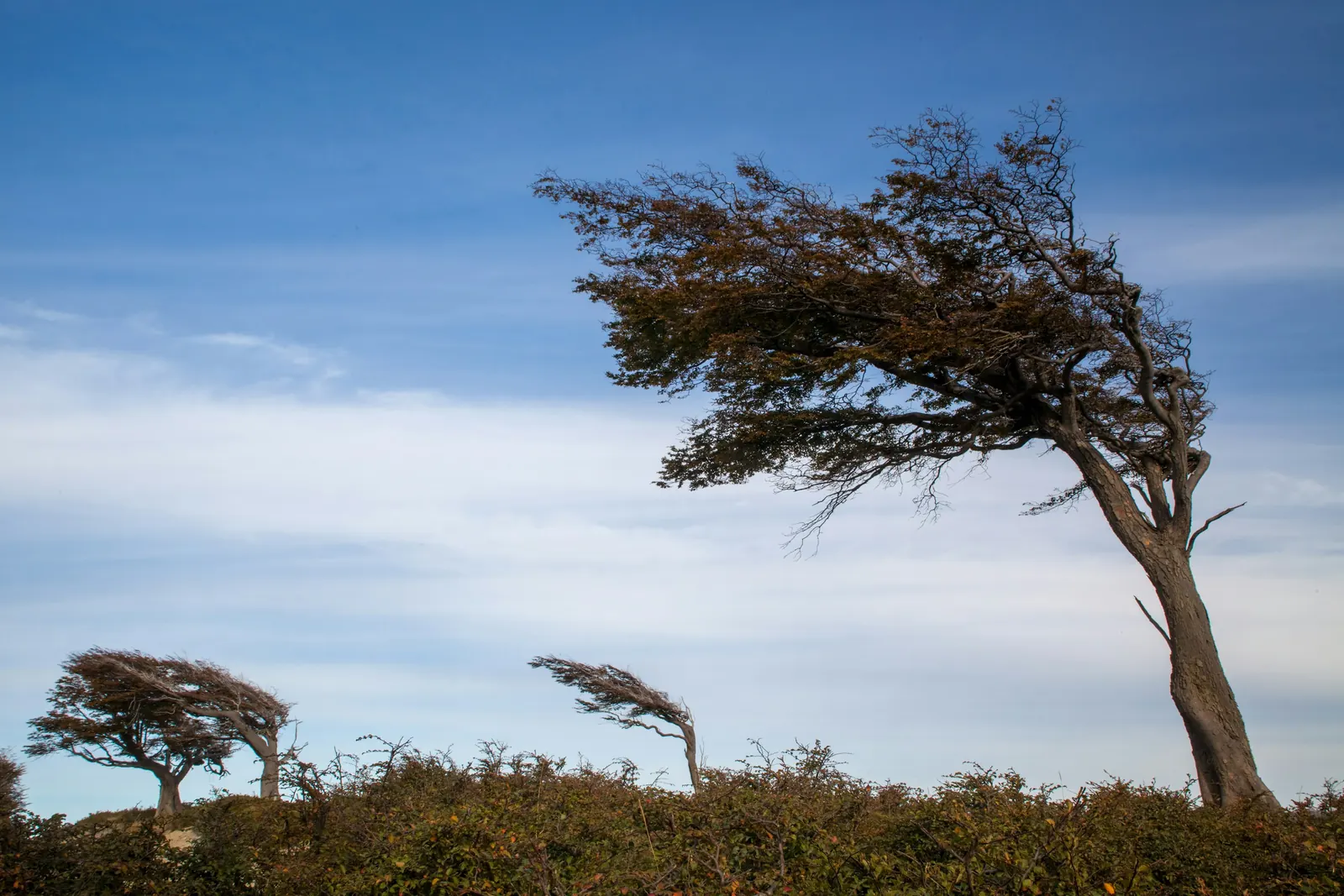
Wind is the biggest load, and most of it acts on the flag. Wind pressure rises with the square of the wind speed, so a gale puts many times the force of a breeze on pole and foundation.
- Manufacturer’s limits: many poles are designed for a particular maximum flag size and wind load.
- A smaller flag in storms: a smaller flag catches less wind and relieves the pole.
- Weather warnings: the Met Office issues weather warnings for wind across the UK. Before severe storms it is common to take the flag down or to lower a hinged pole.
- Size guide: as a guide, the Flag Institute gives a flag length of no more than one third of the height of a ground-level pole. More in the guide to flag sizes.
Fall zone and siting
A pole that breaks can reach roughly as far as it is tall. Houses, paths, play areas, parking spaces and neighbouring land within that distance are affected, and the same applies while a pole is raised or lowered. More in the guide to installing a flagpole.
Electricity and cables
- Overhead lines: aluminium and steel poles conduct electricity, and glass fibre can become conductive when wet or dirty. The risk is greatest when a pole is raised or lowered and swings through a wide arc.
- Buried services: cables and pipes can run where the foundation is dug.
- Lighting: in England, electrical installation work in homes falls under Part P of the Building Regulations; Approved Document P explains when work has to be notified.
Working at height
The greatest risk arises when something at the top needs attention, such as a broken halyard or a jammed pulley.
- Ladders: the Health and Safety Executive describes ladders as a sensible and practical option for low-risk, short-duration tasks, but not automatically the first choice. A flagpole is narrow and flexible, which makes it a poor support for a ladder.
- Hinged poles: a pole that can be lowered allows the work to be done on the ground.
- Access equipment and specialists: for tall fixed poles, access platforms or specialist flagpole firms are common.
- Employers: according to the HSE, work at height means work in any place where a person could fall a distance liable to cause personal injury, and falls from ladders are among the common causes.
Usual checks
| What | When many owners check it |
|---|---|
| Cracks, dents, leaning | spring and autumn |
| Bolts on the hinge and foundation | once a year |
| Halyard, pulley, clips, top fitting | once a year |
| The whole pole | after severe storms |
A pole that leans, has cracks at the base or moves in its foundation may be damaged. More in the guides to flagpole maintenance and flagpole repair.
Insurance
Whether home or business insurance covers damage caused by a flagpole, or damage to it, depends on the policy.
Frequently asked questions
Who is liable if a flagpole falls and injures someone?
Under section 2 of the Occupiers’ Liability Act 1957, the occupier of premises owes visitors the common duty of care: to take such care as is reasonable to see that they will be reasonably safe. Whether an occupier is liable in a particular case depends on the circumstances, and insurance cover depends on the policy.
Is it safe to lean a ladder against a flagpole?
The Health and Safety Executive describes ladders as a sensible and practical option for low-risk, short-duration tasks, but not automatically the first choice. A flagpole is narrow and flexible; a hinged pole, access equipment or a specialist firm are alternatives for work at the top.
What does the law say about working at height?
For employers, the Work at Height Regulations 2005 aim to prevent death and injury from a fall from height. According to the Health and Safety Executive, work at height means work in any place where a person could fall a distance liable to cause personal injury.
When should a flag be taken down in strong wind?
There is no rule. Many manufacturers state the wind speed their pole and flag are designed for, and the Met Office issues weather warnings for strong winds across the UK.
Sources
This guide is based on the following sources:
- Occupiers’ Liability Act 1957, section 2 – legislation.gov.uk
- Safe use of ladders and stepladders – Health and Safety Executive
- Working at height: a brief guide (INDG401) – Health and Safety Executive
- UK weather warnings – Met Office
- Flying flags: a plain English guide – Ministry of Housing, Communities and Local Government
- Electrical safety: Approved Document P – Ministry of Housing, Communities and Local Government
Related guides
- Installing a flagpoleDoes a flagpole need planning permission? The 4.6 metre rule, listed buildings, conservation areas, advertisement consent for flags in England, and foundations.
- Flagpole maintenanceWhat is usually checked when a flagpole is maintained – pole, foundation, halyard, pulley and flag – why upkeep matters for liability, and retiring old flags.
- How a flagpole worksHow a flagpole works: external and internal halyards, the pulley and rotating truck, yardarms, hinged bases and the forces the wind puts on pole and foundation.
- Flagpoles for businessesFlagpoles at business premises: when a company flag needs advertisement consent in England, where it flies next to national flags, and health and safety duties.