
Transporting a flagpole: the rules for long loads
Published Written by Flagpole Guides
Flagpoles are long and slender, and often longer than the car used to collect them. A 6 metre aluminium pole is light, but on a roof rack or small trailer it sticks out well beyond the vehicle. The rules for this are in the Road Vehicles (Construction and Use) Regulations 1986, mainly regulation 82 and Schedule 12.
Projecting loads

Regulation 82 sets conditions for loads that project in front of or behind a vehicle. For ordinary vehicles, Schedule 12 sets out what is required depending on the length of the projection:
| Rearward projection | What Schedule 12 requires |
|---|---|
| up to 1 m | no special marking under regulation 82 |
| more than 1 m, up to 2 m | the projection is rendered clearly visible to other road users from the rear and from either side |
| more than 2 m | an end marker, and for longer projections also side markers and further conditions |
The exact conditions depend on the length and on whether the projection is to the front or the rear. The full text is in regulation 82 and Schedule 12.
Markers
Where Schedule 12 requires an end marker, it is:
- fitted as near as practicable in a transverse plane
- no more than 0.5 metres from the extreme end of the projection
- with its lowest point no more than 2.5 metres above the road
- fitted so that it impedes the driver’s view as little as possible
- clearly visible within a reasonable distance to other road users.
Where the forward projection exceeds 2 metres or the rearward projection exceeds 3 metres, side markers are fitted on both sides as well. The size, shape and colour of the markers are set out in Part II of Schedule 12.
Securing the load
Under regulation 100 of the Construction and Use Regulations, a load has to be secured so that it does not cause danger or nuisance. A long pole moves easily under braking and cornering. Common practice for long poles includes:
- several support points, so that the pole does not sag or swing
- straps at two or more points
- padding at the supports, so that the surface and coating are not damaged
- carrying the top fitting and pulley separately, as they stick out and break easily.
Roof rack or trailer
On a roof rack, the pole sits high, and a rear projection is measured from the back of the vehicle. On a trailer, the load sits lower. Poles made of several sections can often be carried entirely inside the vehicle, which avoids a projecting load altogether.
Delivery by the supplier
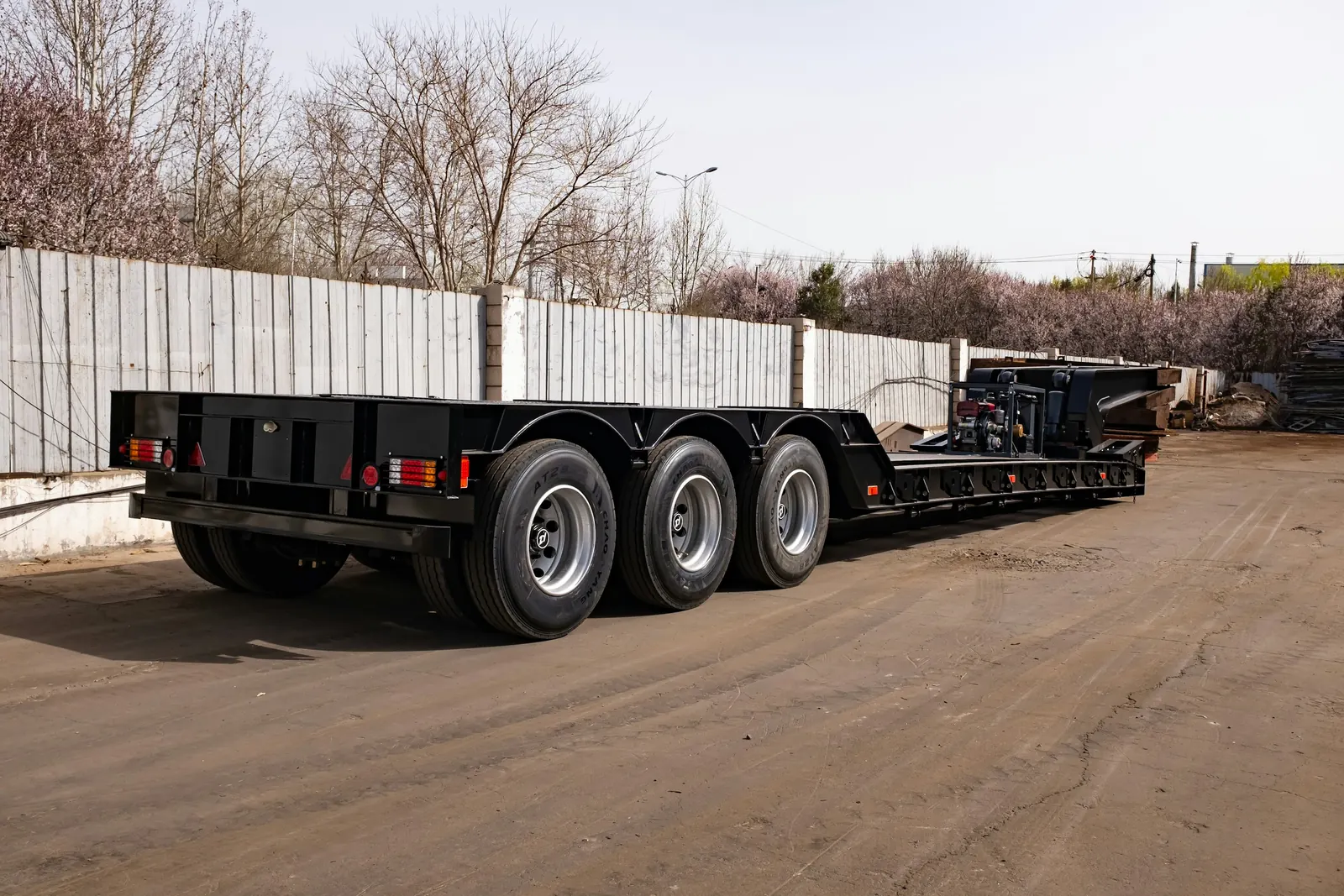
Because of their length, flagpoles can be delivered by the supplier or a carrier. Delivery can be a noticeable part of the total cost, as described in the guide to buying a flagpole.
On site
After delivery, the pole usually lies on site until it is installed. Storing it on several timber supports, dry and without sagging, protects the coating and shape. How the pole is installed and what the planning rules say is described in the guide to installing a flagpole.
Frequently asked questions
How far can a flagpole stick out of the back of a car?
Under regulation 82 of the Road Vehicles (Construction and Use) Regulations 1986, a load projecting more than 1 metre to the rear is subject to conditions in Schedule 12. For a projection of up to 2 metres, the load has to be rendered clearly visible to other road users from the rear and from either side; longer projections need markers and further conditions.
What is an end marker?
An end marker is a marker board described in Schedule 12 to the Construction and Use Regulations. Where required, it is fitted no more than 0.5 metres from the end of the projection, with its lowest point no more than 2.5 metres above the road, and clearly visible to other road users.
Does the load have to be secured?
Yes. The Construction and Use Regulations require a load to be secured so that it does not cause danger or nuisance. A long pole moves easily under braking and cornering, which makes several fixing points and straps common.
Sources
This guide is based on the following sources:
- The Road Vehicles (Construction and Use) Regulations 1986, regulation 82 – legislation.gov.uk
- The Road Vehicles (Construction and Use) Regulations 1986, Schedule 12 – legislation.gov.uk
- The Road Vehicles (Construction and Use) Regulations 1986, regulation 100 – legislation.gov.uk
Related guides
- Installing a flagpoleDoes a flagpole need planning permission? The 4.6 metre rule, listed buildings, conservation areas, advertisement consent for flags in England, and foundations.
- Types of flagpolesGround-mounted, roof-mounted, wall-mounted, telescopic and nautical flagpoles with yardarm and gaff: the main types of flagpole and how UK planning treats them.
- Flagpole materialsAluminium, glass fibre, steel and wooden flagpoles compared: weight, corrosion, maintenance, conductivity and recycling – and the duty to keep a pole safe.
- Lifespan and sustainabilityWhat decides how long a flagpole and a flag last, the signs of wear, and how aluminium, glass fibre and flag fabric are recycled or disposed of.