Types of flagpoles – an overview
Published Written by Flagpole Guides
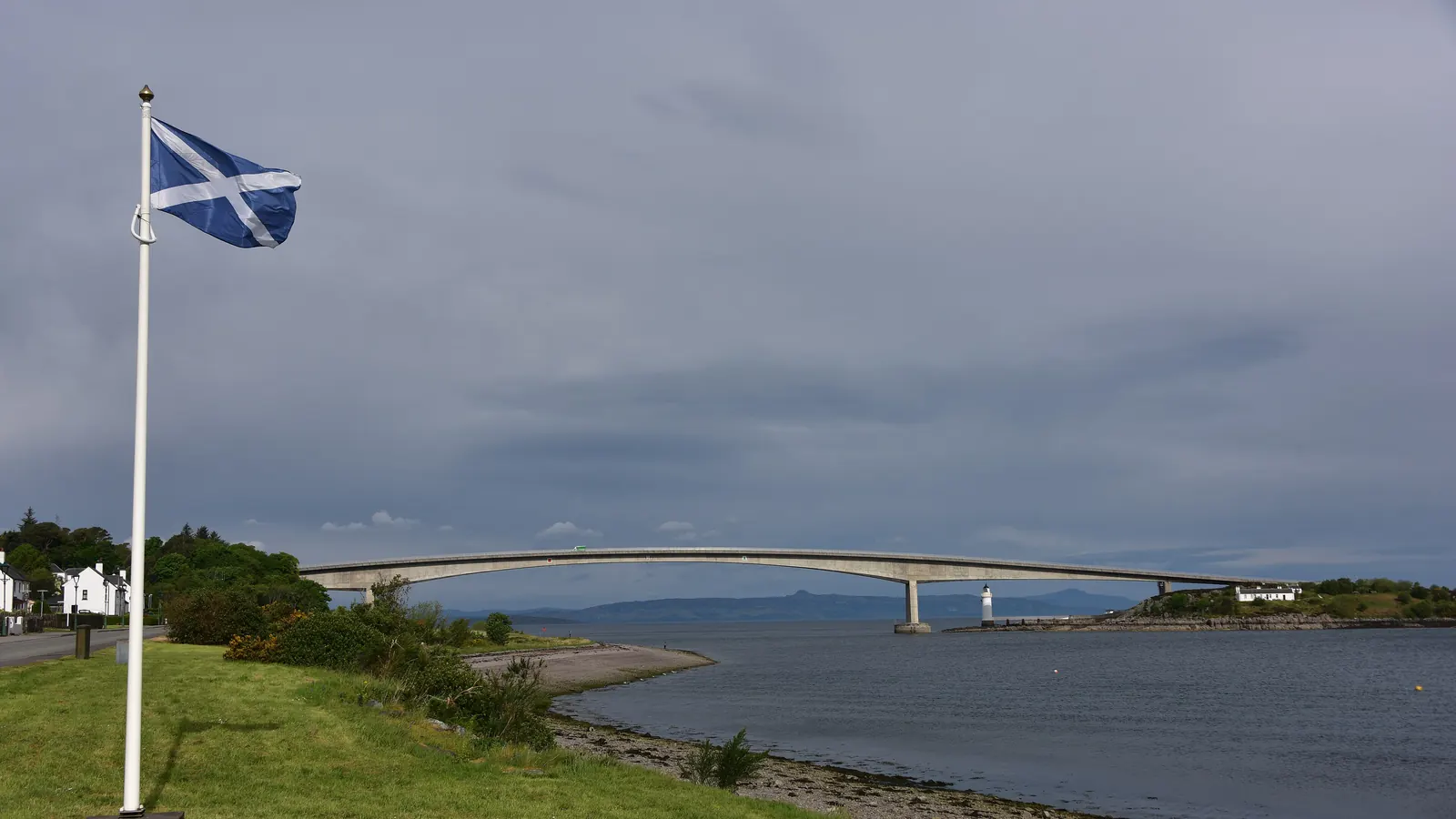
Not all flagpoles are the same. The differences lie less in their appearance than in how they are mounted and how the flag is attached and raised. Which type suits a site depends on the flag, how often it is changed, whether the pole is publicly accessible, how exposed the site is, and, in England, how the planning rules treat that type of pole.
The main types
| Type | Typical use | Planning rules in England (for house and club flags) |
|---|---|---|
| Ground-mounted flagpole | gardens, schools, businesses, town halls | pole in the grounds of a building may not exceed 4.6 m |
| Roof-mounted flagpole | public buildings, offices | vertical roof pole, no limit on flag size |
| Wall-mounted or projecting pole | buildings without room for a ground pole | flag no more than 2 square metres |
| Telescopic flagpole | gardens, holiday homes | treated as a ground-mounted pole |
| Nautical flagpole with yardarm and gaff | sailing clubs, marinas | depends on location |
The planning column applies to flags such as house and club flags in the second category of England’s rules; national flags on a flagpole need no advertisement consent. Separately, according to the Planning Portal, one garden flagpole up to 4.6 metres needs no planning permission. More in the guide to installing a flagpole.
Ground-mounted flagpole with external halyard
The classic flagpole: a rope, the halyard, runs over a pulley in the top of the pole and is secured on a cleat near the base. The flag is clipped to the halyard and hoisted. This design is simple and easy to maintain, and a flag can be held at any height, including half-mast. The drawbacks are that the halyard can slap against the pole in the wind and that others can lower the flag.
Flagpole with internal halyard
Here the halyard runs inside the pole and is reached through a lockable door near the base. This protects the flag against theft and vandalism and largely stops the rope from rattling, which is why the design is common on public sites and business premises. A rope slapping against a pole can be heard a long way at night, which also matters to neighbours.
Roof-mounted and wall-mounted poles
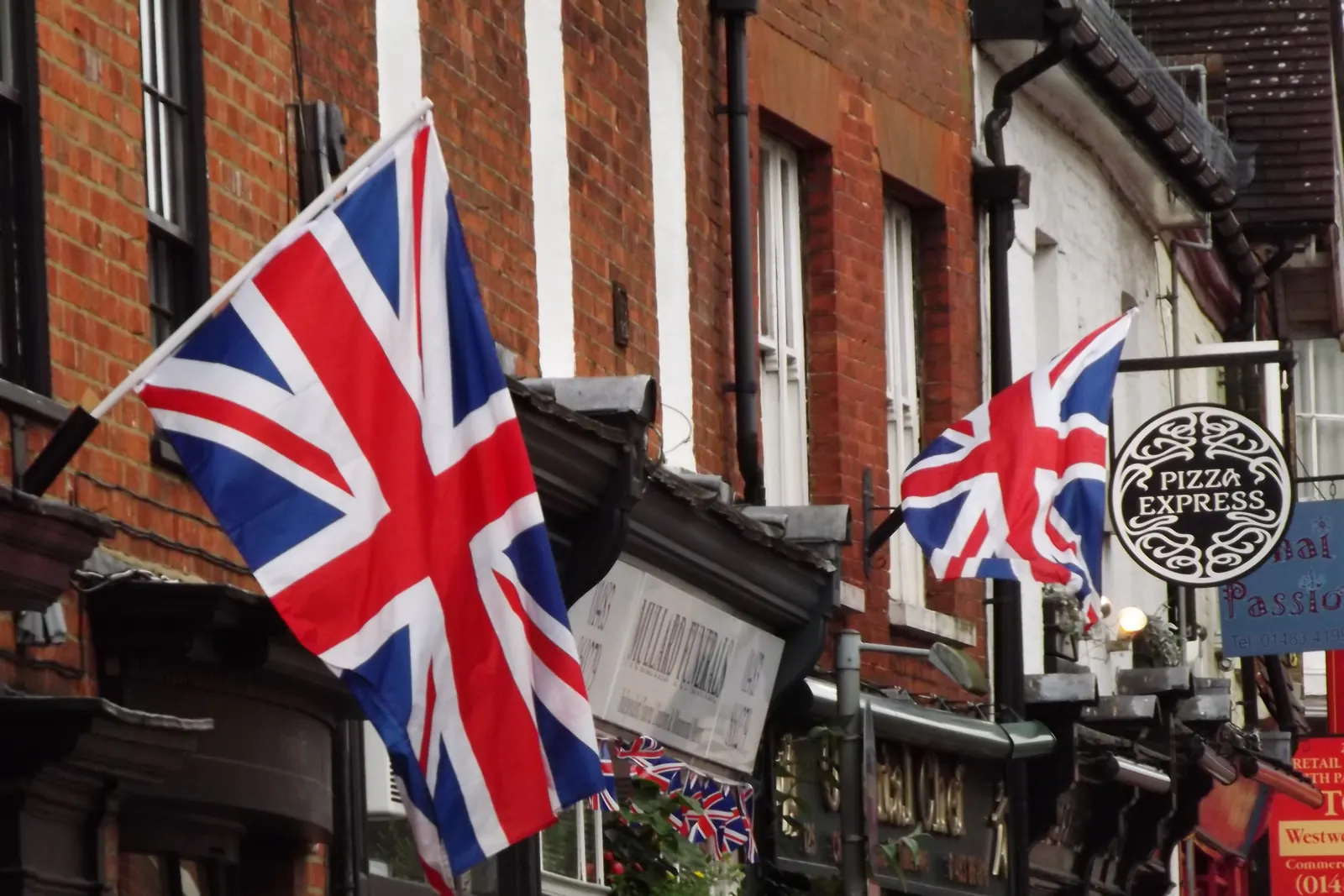
On public and office buildings, flagpoles often stand on the roof. Where there is no room for a ground pole, a pole projecting from the wall is used. According to the Flag Institute, flags cannot be flown at half-mast on poles that are more than 45° from the vertical; a black cravat or ribbon at the top of the flag is used instead. In England, the planning rules also allow a black mourning ribbon on such poles.
Telescopic flagpoles
Telescopic poles consist of several tubes that slide into each other and usually have no halyard. The flag is fixed to rings that move up as the pole is extended. They often stand in a ground socket and can be retracted before a storm or in winter.
Nautical flagpoles
Flagpoles with a yardarm, a horizontal cross-piece, and sometimes a gaff, a short pole attached at an angle, follow the rigging of ships and are found at sailing clubs and marinas. According to the Flag Institute:
- the senior ensign is flown from the gaff
- if no ensign is flown, the gaff stays empty and the senior national flag flies from the starboard yardarm, on the left as viewed from the front
- a yacht club burgee can fly from the masthead, the highest point of the pole.
Groups of flagpoles
In front of town halls, offices and hotels, groups of flagpoles are common, with one pole for each flag. The Flag Institute points out that it is preferable to keep flagpoles at the same level to avoid protocol restrictions. How flags are ordered on them is described in the guide to flag protocol.
Material and height
Aluminium and glass fibre are common materials for flagpoles; steel is used for very tall poles, and wood is rare. More in the guides to flagpole materials, flagpole heights and how a flagpole works.
Frequently asked questions
What type of flagpole is common in a garden?
Ground-mounted flagpoles with an external halyard are common in gardens, often in aluminium or glass fibre. According to the Planning Portal, one flagpole up to 4.6 metres high can be put up in a garden without planning permission; a taller pole needs consent.
What is an internal halyard?
On a flagpole with an internal halyard, the rope runs inside the pole and is reached through a lockable door near the base. This protects the flag from theft and vandalism and reduces the noise of the rope against the pole.
What are the yardarm and gaff on a flagpole?
A yardarm is a horizontal cross-piece and a gaff a short pole attached to the flagpole at an angle, as on a ship. According to the Flag Institute, the senior ensign is flown from the gaff, and the senior national flag from the starboard yardarm, which is on the left as viewed from the front.
Can a flag on a wall-mounted pole be flown at half-mast?
Not if the pole is more than 45° from the vertical, according to the Flag Institute. A black cravat or ribbon at the top of the flag is used instead.
Sources
This guide is based on the following sources:
- Can I put a flagpole in my garden and how tall can it be? – Planning Portal
- Flying flags: a plain English guide – Ministry of Housing, Communities and Local Government
- UK flag protocol – yardarms, gaffs and half-mast – The Flag Institute
Related guides
- Flagpole materialsAluminium, glass fibre, steel and wooden flagpoles compared: weight, corrosion, maintenance, conductivity and recycling – and the duty to keep a pole safe.
- Flagpole heightsHow tall a flagpole can be without planning permission in the UK, which flag size suits which height, the half-mast position, and the fall zone around a pole.
- How a flagpole worksHow a flagpole works: external and internal halyards, the pulley and rotating truck, yardarms, hinged bases and the forces the wind puts on pole and foundation.
- Flagpole accessoriesFinial, truck, pulley, halyard, clips, toggle and rope, cleat, ground socket, hinged base and yardarm: the parts of a flagpole and what each one does.