Flags in mourning: national mourning and funerals in the UK
Published Written by Flagpole Guides
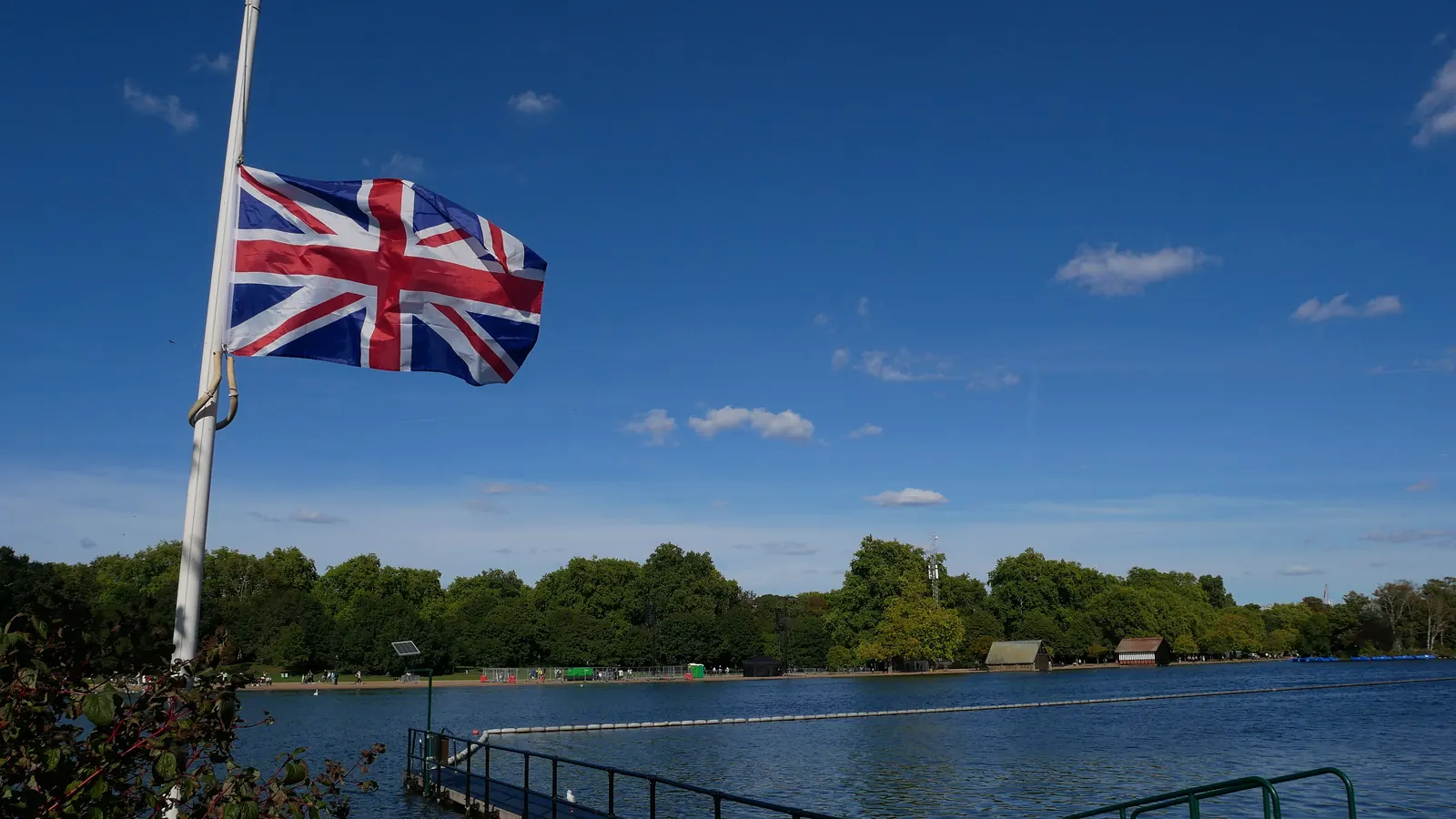
In the UK, flags at half-mast mark royal deaths, state funerals, national tragedies and the deaths of senior politicians. Unlike the fixed designated days, mourning is usually announced for a specific occasion. How a flag is lowered to half-mast is described in the guide to half-mast; this guide covers when and by whom mourning is announced, and how flags are used at funerals.
Royal and national mourning
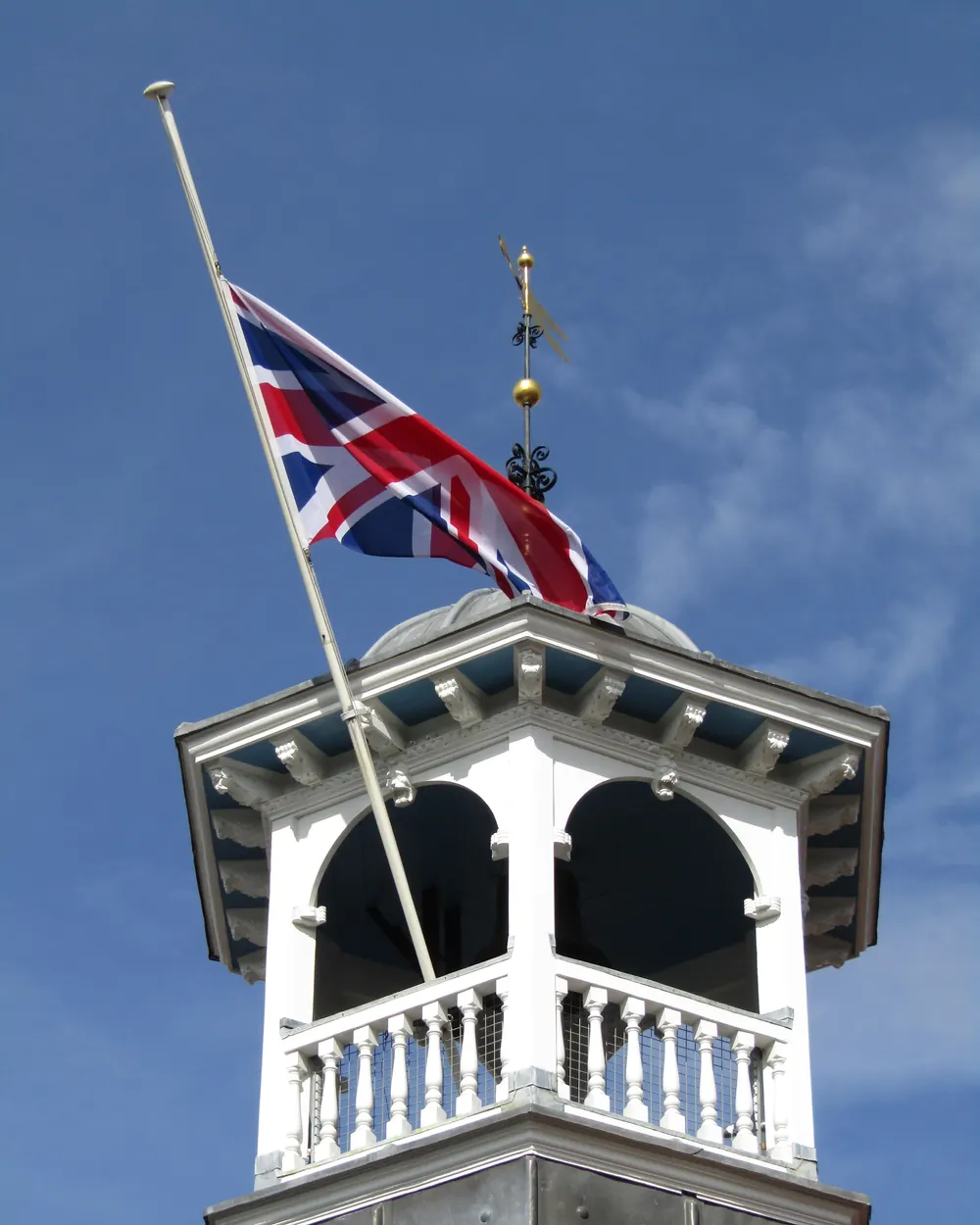
According to the Flag Institute, flags fly at half-mast from the announcement of the death of the Sovereign until the funeral, except on Proclamation Day, when flags fly at full mast following the proclamation of the new monarch. For other members of the Royal Family, half-masting is subject to special commands from the Sovereign in each case. The same applies to the funerals of foreign rulers and of Prime Ministers and former Prime Ministers of the UK.
The Scottish Government’s guidance for its buildings contains a similar list, including the day of the announcement of death, the funeral and the day of any motion of condolence for serving and former First Ministers of Scotland and Prime Ministers. It adds that flags are not flown at half-mast for acts of terrorism and other human tragedies unless a command is issued.
Government announcements
For UK government buildings, the government publishes announcements when flags are to be half-masted. Past announcements have covered, for example, victims of attacks in the UK and abroad and the deaths of foreign heads of state. A 2021 announcement, for example, stated that other organisations and local authorities may follow suit if they wish.
In Northern Ireland, the Flags Regulations (Northern Ireland) 2000 provide that the Union Flag is flown at half-mast at the specified government buildings following the death of a member of the Royal Family or of a serving or former Prime Minister of the United Kingdom, on days notified in the Belfast Gazette.
Mourning with a black ribbon
Where a flag cannot be flown at half-mast, for example on a pole at more than 45° from the vertical, the Flag Institute describes adding a black cravat or ribbon to the top of the flag at the hoist. In England, the planning regulations explicitly allow a black mourning ribbon on the flag or flagpole in such cases, according to the government’s plain English guide.
The flag at a funeral
According to the Flag Institute:
- A national flag on a coffin is placed so that the top-left corner of the flag is over the deceased’s left shoulder.
- The flag is removed and folded before interment or cremation.
- A flag to be kept by the next of kin can be folded by the Royal Navy’s method, which the Flag Institute describes step by step.
- If the body of a very distinguished citizen is lying in a building, the flag flies at half-mast on that building until the body has left.
Private mourning

For households, clubs and companies there is no rule on when to fly a flag at half-mast. According to the Flag Institute, flags may be flown at half-mast on private or non-government buildings on other relevant occasions. Whether a flag is lowered after a death in the family, a club or a company is a personal decision. Those who join an official period of mourning can follow the same procedure as government buildings. The order of several flags is described in the guide to flag protocol.
Frequently asked questions
Who announces that flags should fly at half-mast in the UK?
Half-masting on UK government buildings follows the Sovereign’s command, and the government publishes announcements such as ‘Flags on UK government buildings to be half-masted’. A 2021 announcement stated that other organisations and local authorities may follow suit if they wish.
How is a flag placed on a coffin?
According to the Flag Institute, a national flag on a coffin is placed so that the top-left corner of the flag is over the deceased’s left shoulder. The flag is removed and folded before interment or cremation.
Can a private household fly its flag at half-mast after a family death?
Yes. No law prevents it. According to the Flag Institute, flags may be flown at half-mast on private or non-government buildings on relevant occasions beyond royal and national mourning.
Are flags at half-mast on Remembrance Sunday?
No. According to the Flag Institute, flags fly at full mast on Remembrance Sunday.
Sources
This guide is based on the following sources:
- UK flag protocol – half-mast and flags on coffins – The Flag Institute
- Flags on UK government buildings to be half-masted – UK government
- Flag flying on government buildings: guidance – Scottish Government
- The Flags Regulations (Northern Ireland) 2000 – legislation.gov.uk
Related guides
- Half-mastWhat half-mast means in the UK: how far down the flag flies, how it is raised and lowered, when flags go to half-mast and when a black mourning ribbon is used.
- Flag protocolThe order of precedence of flags in the UK, the superior position on one or several flagpoles, flags in a line or circle, on platforms and in processions.
- Flag flying rulesUK flag flying rules and etiquette: who may fly which flag, flying times, flying at night, the right way up for the Union Flag and retiring worn-out flags.
- Flag daysAll designated days for flying the Union Flag on UK government buildings in 2026 and 2027, with the separate rules for Scotland and Northern Ireland.