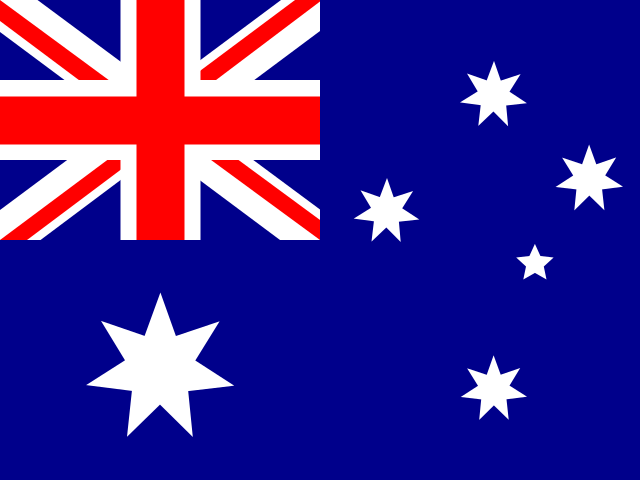
Flag flying rules in Australia
Published Written by Flagpole Guides
The Australian National Flag is defined by law, but how it is flown is mostly a matter of protocol. The Flags Act 1953 sets out the design and allows the Governor-General to publish rules for the guidance of people flying the flag. The practical rules are in the booklet Australian Flags from the Department of the Prime Minister and Cabinet (PM&C), which describes them as based on longstanding international and national practice. The guidelines apply to the Australian National Flag and, according to the booklet, to flags generally.
Who may fly the flag
According to PM&C, any person may fly the Australian National Flag, and it may be flown on every day of the year. No permission is needed. The booklet adds that the flag should be treated with the respect and dignity it deserves as the nation’s most important national symbol. The Flags Act also states that it does not affect anyone’s right to fly the Union Jack.
Raising and lowering
The PM&C protocol describes the following practice:
- The flag is raised no earlier than first light and lowered no later than dusk.
- It is raised briskly and lowered with dignity.
- It flies aloft and free, as close as possible to the top of the pole, with the rope tightly secured.
- When the flag is raised or lowered, those present face the flag and remain silent; those in uniform salute.
- When flown with other flags, the Australian National Flag is raised first and lowered last, unless all flags are raised and lowered together.
Flying at night
According to PM&C, the flag may only be flown at night when it is illuminated. A flag at half-mast is not flown at night, whether or not it is lit, unless a direction has been given to half-mast it for an extended period. Lighting is covered in the guide to flag lighting.
The dignity of the flag
The booklet lists what the flag is not used for:
- it is not allowed to fall or lie on the ground
- it is not used to cover a statue, monument or plaque at an unveiling, or to cover a table or seat
- it is not used to mask boxes, barriers or the space below a dais or platform
- it is not flown upside down, even as a signal of distress
- two flags are not flown from the same flagpole
- it is not flown in a position inferior to any other flag, and it is not smaller than any other flag flown with it.
The flag may, however, cover the coffin of any Australian at their funeral. More about this is in the guide to flags in mourning.
Old, faded and damaged flags
According to PM&C, the flag should never be flown when it is damaged, faded or dilapidated. When the material deteriorates to the point where it is no longer suitable for use, the flag can be placed in a permanent place of storage or destroyed privately and in a dignified way. PM&C gives an example: cutting it into small unrecognisable pieces, placing them in a sealed bag or closed container and putting it in the normal rubbish collection. PM&C also publishes an outline for an optional flag retirement ceremony, in which the flag is cut into three pieces so that the Union Jack, the Commonwealth Star and the Southern Cross each stay intact. How long a flag lasts outdoors is covered in the guide to flagpole lifespan.
Displaying the flag flat or vertically
Whether the flag is on a staff, on a flag rope or flat against a wall, the canton with the Union Jack is in the upper left quarter as seen by a person facing the flag, according to the booklet. This applies even when the flag hangs vertically, where it can look back to front to a casual observer. Displayed alone on a speaker’s platform, the flag is flat against the wall or on a staff on the speaker’s right. Suspended across a street, the canton points north in an east–west street and east in a north–south street.
Commercial use of the flag
According to PM&C, the Australian National Flag can be used for commercial purposes, including advertising, without formal permission. The guidelines are that the flag is used in a dignified manner and reproduced completely and accurately, is not covered by other words, illustrations or objects, and that all its symbolic parts can be identified. Items bearing the flag are restricted imports under the Customs (Prohibited Imports) Regulations 1956, and importers get PM&C’s approval of the design before importing them. More in the guide to flagpoles for businesses.
Other flags
The same guidelines are used for other flags. The Australian Aboriginal Flag and the Torres Strait Islander Flag may be flown at any time, according to PM&C. Defence ensigns are different: according to PM&C, permission from the relevant service is required to fly or use them. The order of flags is explained in the guide to flag protocol, and the official flags in the guide to flag types.
Frequently asked questions
Is there a law on how the Australian flag is flown?
The Flags Act 1953 defines the Australian National Flag and allows the Governor-General to publish rules for the guidance of people flying it. The practical protocol is set out by the Department of the Prime Minister and Cabinet in the booklet Australian Flags, which is guidance based on longstanding international and national practice.
What time is the flag raised and lowered?
According to the Australian Flags booklet, the flag is raised no earlier than first light and lowered no later than dusk. It may be flown at night only when it is illuminated.
Can two flags be flown from one flagpole?
According to the PM&C protocol, two flags should not be flown from the same flagpole. When several flags are flown, each has its own pole, and the Australian National Flag takes the position of honour.
What happens to an old or faded flag?
According to PM&C, a flag should not be flown when it is damaged, faded or dilapidated. It can be kept in a permanent place of storage or destroyed privately and in a dignified way, for example by cutting it into small unrecognisable pieces and putting them in a sealed bag in the normal rubbish collection.
Can a business use the Australian flag in advertising?
Yes. According to PM&C, the Australian National Flag can be used for commercial purposes, including advertising, without formal permission, as long as it is used in a dignified manner and reproduced completely and accurately. Importing goods that bear the flag needs PM&C’s approval of the design.
Sources
This guide is based on the following sources:
- Flags Act 1953, sections 3 and 7 – Federal Register of Legislation
- Australian Flags booklet – Part 2: The protocols for the appropriate use and the flying of the flag – Department of the Prime Minister and Cabinet
- Australian National Flag protocols – Department of the Prime Minister and Cabinet
- Use of the Australian National Flag and other official flags – Department of the Prime Minister and Cabinet
Related guides
- Flag daysAll days on which flying the Australian flag is encouraged in 2026 and 2027, from Australia Day and Anzac Day to NAIDOC Week and Remembrance Day.
- Half-mastWhat half-mast means in Australia: how far down the flag flies, how it is raised and lowered, the rules at night and when flags are flown at half-mast.
- Flag protocolThe order of precedence for flags in Australia and where each flag flies: with state flags, the Aboriginal and Torres Strait Islander flags, and on yardarms.
- Flag lightingWhen the Australian flag may fly at night, how flags are lit, half-mast after dark, light spill onto neighbours and lighting near Siding Spring Observatory.
- Flag typesThe official flags of Australia: the national flag, the red ensign, the Aboriginal and Torres Strait Islander flags, Defence ensigns and state flags.