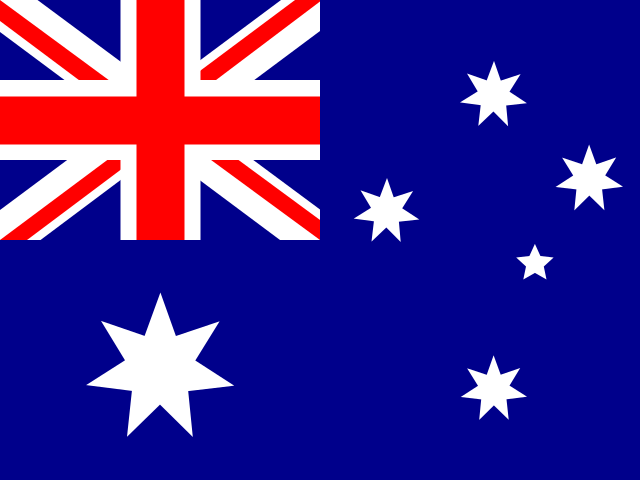
Flag lighting in Australia: flying the flag at night
Published Written by Flagpole Guides
A lit flag over a council chamber, a war memorial or a company headquarters is visible by night as well as by day. In Australia, the protocol of the Department of the Prime Minister and Cabinet (PM&C) links flying at night directly to lighting: the flag may only be flown at night when it is illuminated. Those who light a flag also touch on other rules: nuisance from light spill, electrical safety, and in one part of New South Wales, the protection of a dark night sky.
Day and night in the protocol
According to PM&C:
- the flag is raised no earlier than first light and lowered no later than dusk
- it may be flown at night only when it is illuminated
- a flag is not flown at half-mast at night, whether or not it is lit, unless a direction has been issued to half-mast it for an extended period.
The last rule was relaxed during the mourning for Queen Elizabeth II in September 2022, when the Commonwealth Flag Network notices stated that flags could be flown at half-mast overnight, provided they were illuminated. More in the guide to half-mast.
How flags are lit
The usual ways of lighting a flag are:
- Ground spotlights at the base of the pole, pointing up at the flag. They are simple to install but also light the sky above the flag.
- Lights mounted on the pole, near the top, pointing down at the flag, which keeps the light on the flag and reduces spill.
- Solar lights on the finial or truck, for poles without mains power.
A flag that stays up day and night also wears faster. According to the flag maker Evan Evans, flags flown during daylight hours only usually last longer, and a flag left outdoors day and night in harsh conditions can fade or fray within weeks. More in the guide to flagpole lifespan.
Light spill and neighbours
Light that shines into neighbouring homes can become a nuisance. In Queensland, environmental nuisance under the Environmental Protection Act 1994 includes light, and councils investigate complaints. Brisbane City Council lists illuminated signs and floodlights among the sources of light nuisance. Its suggestions for reducing it include timers or sensors, lights that are off when not needed, warm white, lower-lumen LED globes, lights directed downwards rather than upwards and shields where up-lighting is unavoidable. Other states and councils have their own nuisance rules.
Dark skies near Siding Spring
In New South Wales, the exempt development code contains a rule found nowhere else: development on land less than 18 km from the Siding Spring Observatory near Coonabarabran is not exempt development if it has, or will require, any form of lighting. A lit flagpole in that area therefore needs an assessment, even if the pole itself would otherwise be exempt. More in the guide to installing a flagpole.
Electrical work
Fixed lighting on a flagpole is electrical work. In Australia, electrical installation work is licensed in every state and territory, and connections to mains power are done by a licensed electrician. Solar lights avoid mains wiring. For the pole itself, overhead power lines are a separate hazard, covered in the guide to flagpole safety.
Businesses and public buildings
Businesses, clubs and councils often light their flags so that they can stay up around the clock. In New South Wales, a flag on a flagpole that is exempt development must not be used for advertising, and illuminated signs are among the sources of light nuisance listed by Brisbane City Council. More in the guide to flagpoles for businesses.
Frequently asked questions
Can the Australian flag be flown at night?
Yes, when it is lit. According to the Department of the Prime Minister and Cabinet, the flag is raised no earlier than first light and lowered no later than dusk, and it may only be flown at night when it is illuminated.
Can a flag at half-mast stay up at night?
According to PM&C, a flag is not flown at half-mast at night, whether or not it is illuminated, unless a direction has been issued to half-mast it for an extended period. During the mourning for Queen Elizabeth II in 2022, the notices allowed flags to stay at half-mast overnight if they were lit.
Can a neighbour complain about a floodlit flag?
Yes. Light that unreasonably interferes with neighbours can be a nuisance. In Queensland, for example, councils investigate light nuisance under the Environmental Protection Act 1994, and Brisbane City Council lists floodlights among the sources of light nuisance.
Does flag lighting need approval?
Usually not for a simple light at a house, but it can. Near the Siding Spring Observatory in New South Wales, development with lighting within 18 km of the observatory is not exempt development under the state’s exempt development code. Fixed electrical work is done by a licensed electrician.
Sources
This guide is based on the following sources:
- Australian National Flag protocols – Department of the Prime Minister and Cabinet
- Australian Flags booklet – Flying the Australian National Flag at half-mast – Department of the Prime Minister and Cabinet
- Flag announcement: Her Majesty The Queen – Department of the Prime Minister and Cabinet
- Light and glare complaints – Brisbane City Council
- State Environmental Planning Policy (Exempt and Complying Development Codes) 2008, clause 1.16A – NSW Legislation
- Flag care and etiquette – Evan Evans
Related guides
- Flag flying rulesThe rules for flying the Australian flag: who may fly it, hoisting times, flying at night, the dignity of the flag, disposal of old flags and commercial use.
- Flagpole accessoriesThe parts of a flagpole explained: truck and pulley, finial, halyard, clips, cleat, internal halyard hatch, yardarm, base and lighting, as used in Australia.
- Flagpoles for businessesFlagpoles for Australian businesses: company flags beside the national flag, using the flag in advertising, imports and trade marks, permits and WHS duties.
- Installing a flagpoleInstalling a flagpole in Australia: when a permit is needed in each state, boundary setbacks, heritage, footings, underground services and power lines.