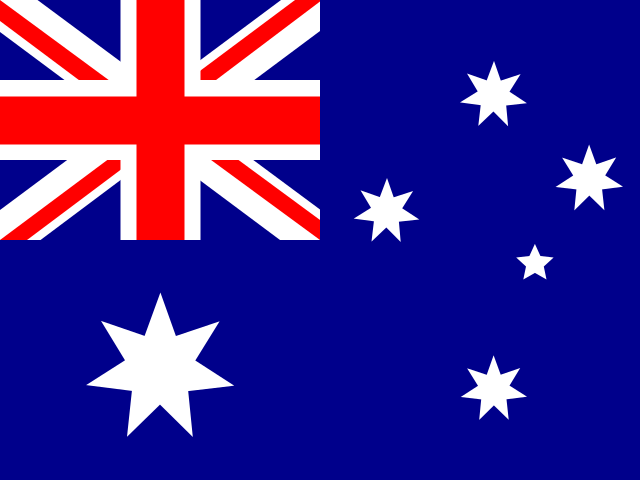
Half-mast in Australia – position, procedure and occasions
Published Written by Flagpole Guides
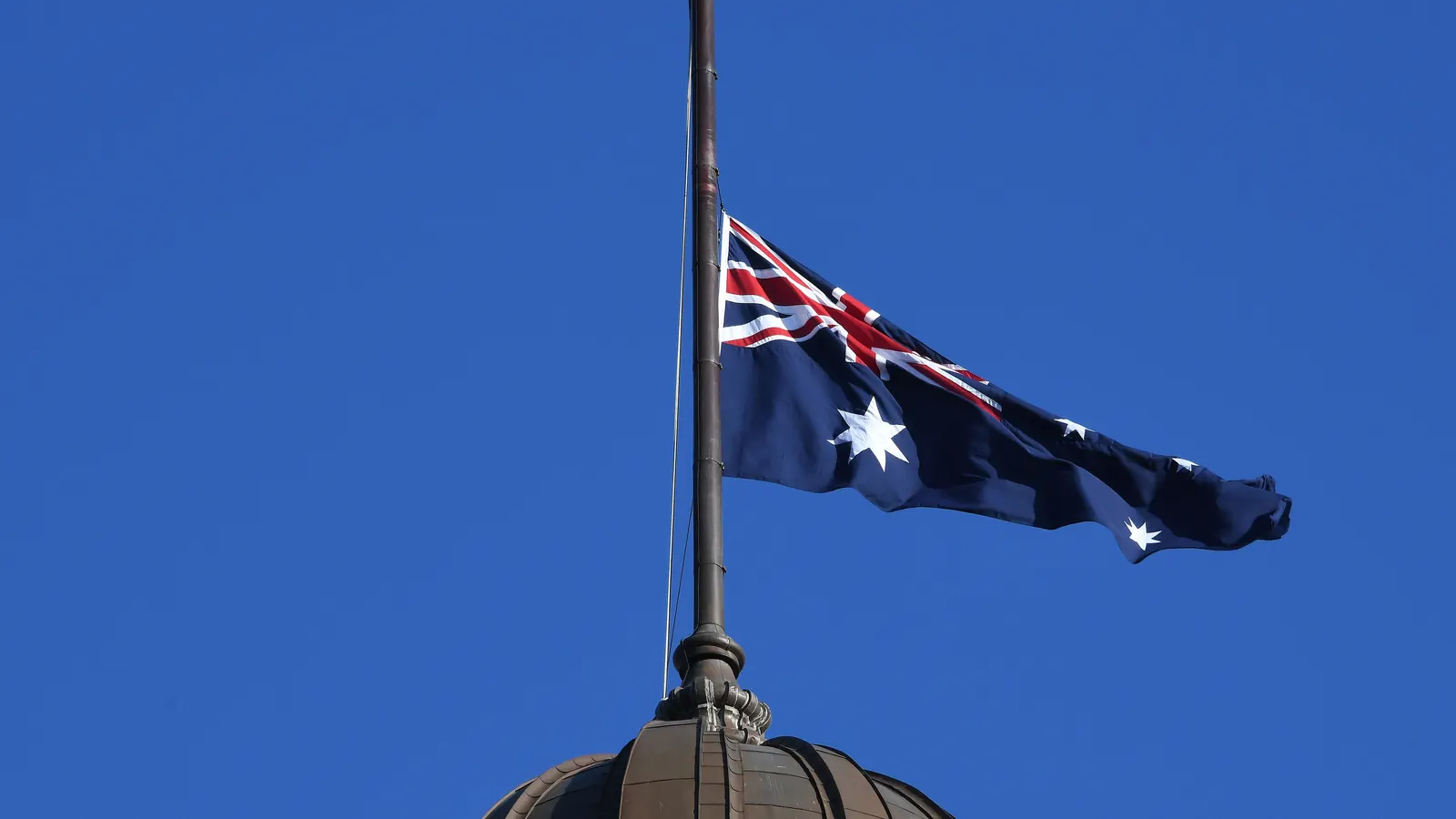
A flag at half-mast is the most visible sign of mourning in Australia. There is no law that says how it is done, but the booklet Australian Flags and the protocol pages of the Department of the Prime Minister and Cabinet (PM&C) describe the position and the procedure, and the Commonwealth Flag Network announces when flags on Australian Government buildings fly at half-mast. Private flag owners are not bound by these directions, but many follow them.
How far down
According to PM&C, the half-mast position depends on the size of the flag and the length of the flagpole. The flag is lowered to a position that is recognisably half-mast, so that it does not look as if it has simply slipped down from the top. PM&C gives a practical measure: an acceptable position is when the top of the flag is a third of the distance down from the top of the flagpole. The booklet adds an old way of estimating it: imagining another flag flying above the half-masted one, which in European tradition is the flag of death.
| Pole height | Top of the flag, a third of the way down |
|---|---|
| 6 m | about 2 m below the top |
| 7.5 m | about 2.5 m below the top |
| 9 m | about 3 m below the top |
| 12 m | about 4 m below the top |
The procedure
The Australian Flags booklet describes the following sequence:
- The flag is first raised to the top of the mast, the peak.
- It is then immediately lowered slowly to the half-mast position.
- When the flag is taken down, it is raised briefly to the peak again.
- It is then lowered ceremoniously.
When the Australian National Flag is flown with other flags, all flags in the set are flown at half-mast, and the Australian National Flag is raised first and lowered last.
Half-mast at night
According to PM&C, a flag is not flown at half-mast at night, whether or not it is illuminated, unless a direction has been issued to half-mast it for an extended period. After the death of Queen Elizabeth II in September 2022, the Commonwealth Flag Network notices stated that flags could be flown at half-mast overnight, provided they were illuminated.
When flags fly at half-mast
The booklet names occasions on which the Australian Government gives a direction for flags to be flown at half-mast:
- on the death of the Sovereign, from the announcement of the death up to and including the funeral; on the day the accession of the new Sovereign is proclaimed, the flag is customarily raised to the top of the mast from 11 am until the usual time for closure of business
- on the death of a member of the royal family, by special command of the Sovereign and/or by direction of the Australian Government
- on the death of the Governor-General or a former Governor-General
- on the death of a distinguished Australian citizen, in accordance with protocol
- on the death of the head of state of another country with which Australia has diplomatic relations, on the day of the funeral or as directed
- on days of national commemoration such as Anzac Day and Remembrance Day.
Flags in any locality may also be flown at half-mast on the death of a local citizen, or on the day or part of the day of their funeral, without a direction from the Australian Government, according to the booklet.
Anzac Day and Remembrance Day
On Anzac Day, 25 April, the flag flies at half-mast from dawn until noon, then at the peak for the rest of the day, according to the 2026 notice. On Remembrance Day, 11 November, it flies at the peak from about 8 am, at half-mast from 10:30 am and at the peak again from 11:02 am, which allows for the ceremonies and the minute of silence at 11 am. More in the guide to flag days.
Flags of other nations and vice-regal flags
If a set of flags includes the flags of other nations, the Commonwealth Flag Network notices state that it would be appropriate to seek permission from that nation’s diplomatic representatives before half-masting their flag. After the death of Queen Elizabeth II, the notices stated that vice-regal standards remained at full mast. More about periods of mourning is in the guide to flags in mourning.
Half-mast on a private flagpole
On poles with an external or internal halyard, the flag can be held at any height. On poles without a halyard, such as some wall-mounted flag staffs, the flag cannot be lowered. How halyards work is explained in the guide to how a flagpole works.
Frequently asked questions
How far down is a flag at half-mast?
According to the Department of the Prime Minister and Cabinet, an acceptable half-mast position is when the top of the flag is a third of the distance down from the top of the flagpole. The position depends on the size of the flag and the length of the pole, and the flag is lowered far enough that it does not look as if it has slipped down.
Why is the flag raised to the top before half-mast?
According to the Australian Flags booklet, the flag is first raised to the top of the mast, the peak, and then lowered slowly to the half-mast position. When it is taken down for the day, it is first raised briefly to the peak again and then lowered ceremoniously.
Who decides when flags fly at half-mast in Australia?
The Australian Government gives directions for flags on Australian Government buildings, announced through the Commonwealth Flag Network. According to PM&C, flags in any locality may also be flown at half-mast on the death of a local citizen or on the day of their funeral without a direction from the government.
Can a flag stay at half-mast overnight?
According to PM&C, a flag is not flown at half-mast at night, whether or not it is illuminated, unless a direction has been issued to half-mast it for an extended period. After the death of Queen Elizabeth II in 2022, the notices allowed flags to stay at half-mast overnight provided they were illuminated.
What about other flags at the same site?
When the Australian National Flag is flown with other flags, all flags in the set are flown at half-mast, according to PM&C. For flags of other nations, the Commonwealth Flag Network notices say it is appropriate to seek permission from that nation’s diplomatic representatives.
Sources
This guide is based on the following sources:
- Australian Flags booklet – Flying the Australian National Flag at half-mast – Department of the Prime Minister and Cabinet
- Australian National Flag protocols – Department of the Prime Minister and Cabinet
- Flag announcement: Anzac Day 2026 – Department of the Prime Minister and Cabinet
- Flag announcement: Remembrance Day – Department of the Prime Minister and Cabinet
- Flag announcement: Her Majesty The Queen – Department of the Prime Minister and Cabinet
Related guides
- Flags in mourningHow flags are used in mourning in Australia: the death of the Sovereign, national days of mourning, state funerals, local deaths and the flag on a coffin.
- Flag daysAll days on which flying the Australian flag is encouraged in 2026 and 2027, from Australia Day and Anzac Day to NAIDOC Week and Remembrance Day.
- Flag flying rulesThe rules for flying the Australian flag: who may fly it, hoisting times, flying at night, the dignity of the flag, disposal of old flags and commercial use.
- How a flagpole worksHow a flagpole works: the halyard and pulley, internal and external halyards, raising briskly and lowering with dignity, gaffs and the hinged base.