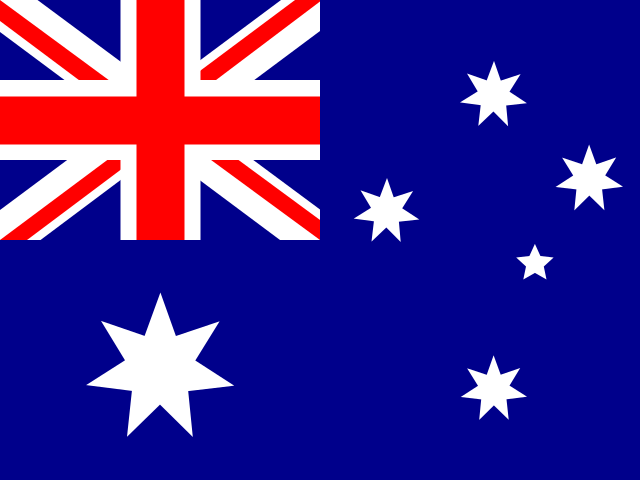
Flags of Australia: national flag, ensigns, Aboriginal and state flags
Published Written by Flagpole Guides
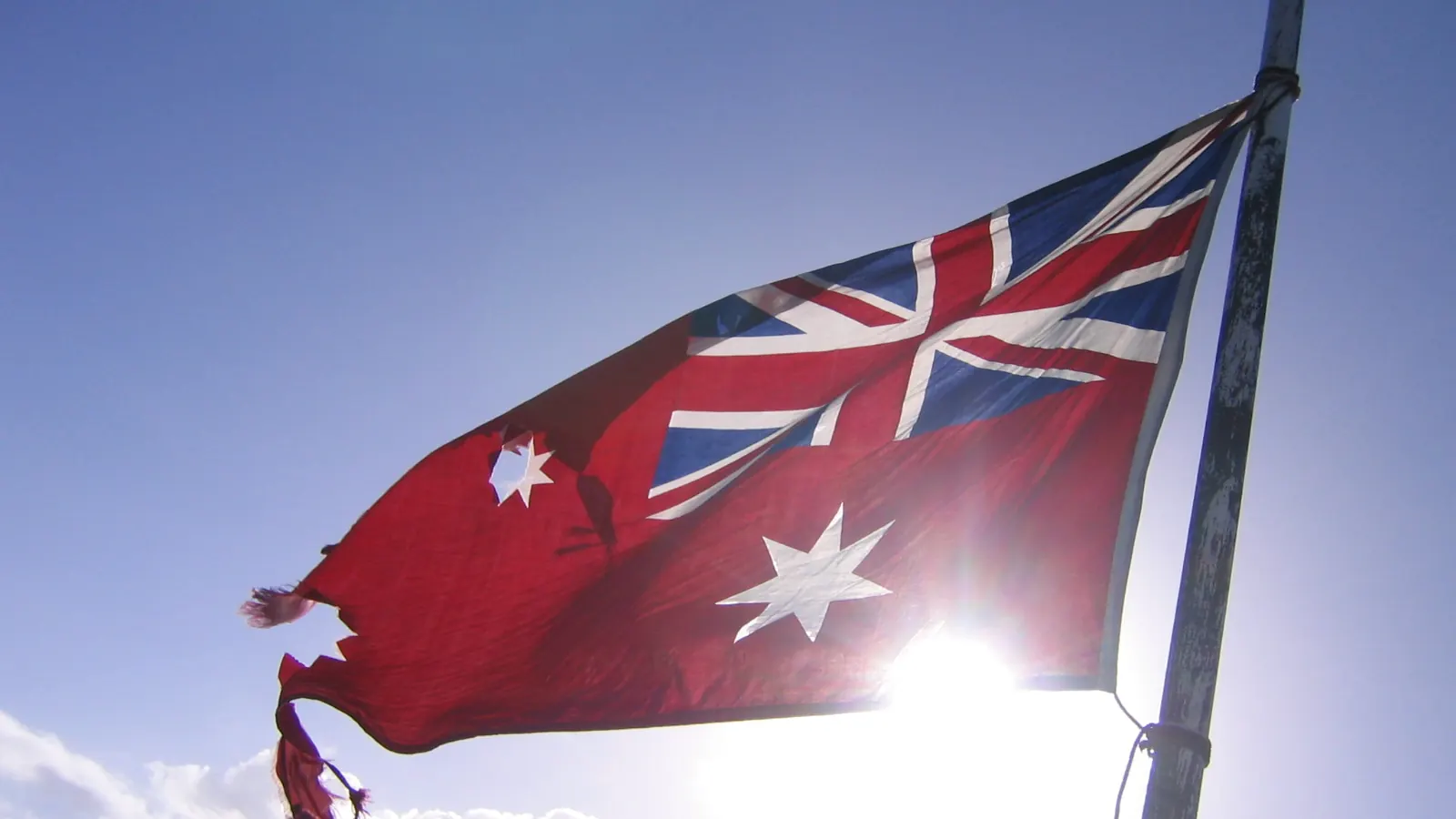
Australia has more official flags than most countries. The Flags Act 1953 defines two of them, the Australian National Flag and the Australian Red Ensign, and allows the Governor-General to appoint further flags and ensigns of Australia by proclamation. The Department of the Prime Minister and Cabinet (PM&C) describes them in part 3 of the booklet Australian Flags. This guide gives an overview; the meaning of the national flag is covered in the guide to the Australian flag.
The Australian National Flag
The national flag is the blue flag described in Schedule 1 of the Flags Act: the Union Jack in the upper quarter next to the staff, a large seven-pointed white Commonwealth Star below it, and the five white stars of the Southern Cross in the fly. Any person may fly it, on any day. According to PM&C, its colours are PANTONE 280 blue and PANTONE 185 red.
The Australian red ensign
The Australian Red Ensign has the same design on a red field. According to PM&C, it is the flag flown by Australian-registered merchant ships, as confirmed by the Shipping Registration Act 1981. Government ships, fishing vessels, pleasure craft and commercial vessels under 24 metres may fly either the national flag or the red ensign, but not both at once. Historically, the red ensign was also used on land. On Merchant Navy Day, 3 September, it may be flown on land for ceremonial purposes.
The Australian Aboriginal Flag
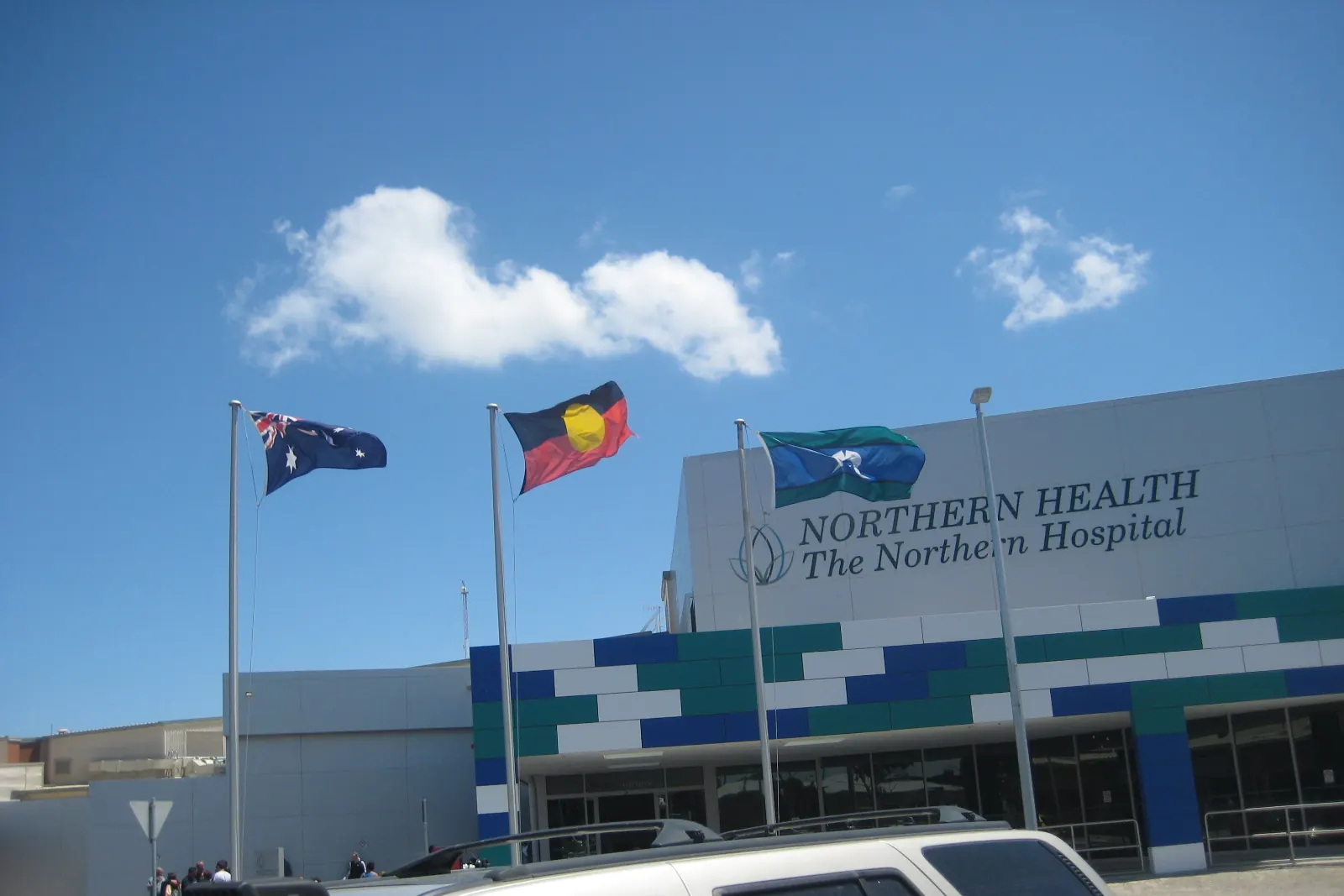
The Australian Aboriginal Flag was designed by Harold Thomas and first raised on 9 July 1971 at Victoria Square in Adelaide. It was proclaimed a flag of Australia under the Flags Act on 14 July 1995. The top half is black, for the Aboriginal peoples; the bottom half is red, for the earth and ochre; and the yellow circle in the centre is the sun. Since 25 January 2022, the Commonwealth owns the copyright. According to PM&C, Carroll & Richardson-Flagworld is the exclusive licensed manufacturer of the flag on flags, pennants, banners and bunting, and the public may reproduce the design freely on all other media.
The Torres Strait Islander Flag
The Torres Strait Islander Flag was adopted in May 1992 at the Torres Strait Islands Cultural Festival and is attributed to the late Bernard Namok of Thursday Island. It was proclaimed on the same day as the Aboriginal flag in 1995. Green panels stand for the land, blue for the sea and black lines for the people; in the centre is a white Dhari, a traditional headdress, over a five-pointed star for the island groups. The Torres Strait Island Regional Council holds the copyright, and according to PM&C no permission is needed to fly the flag.
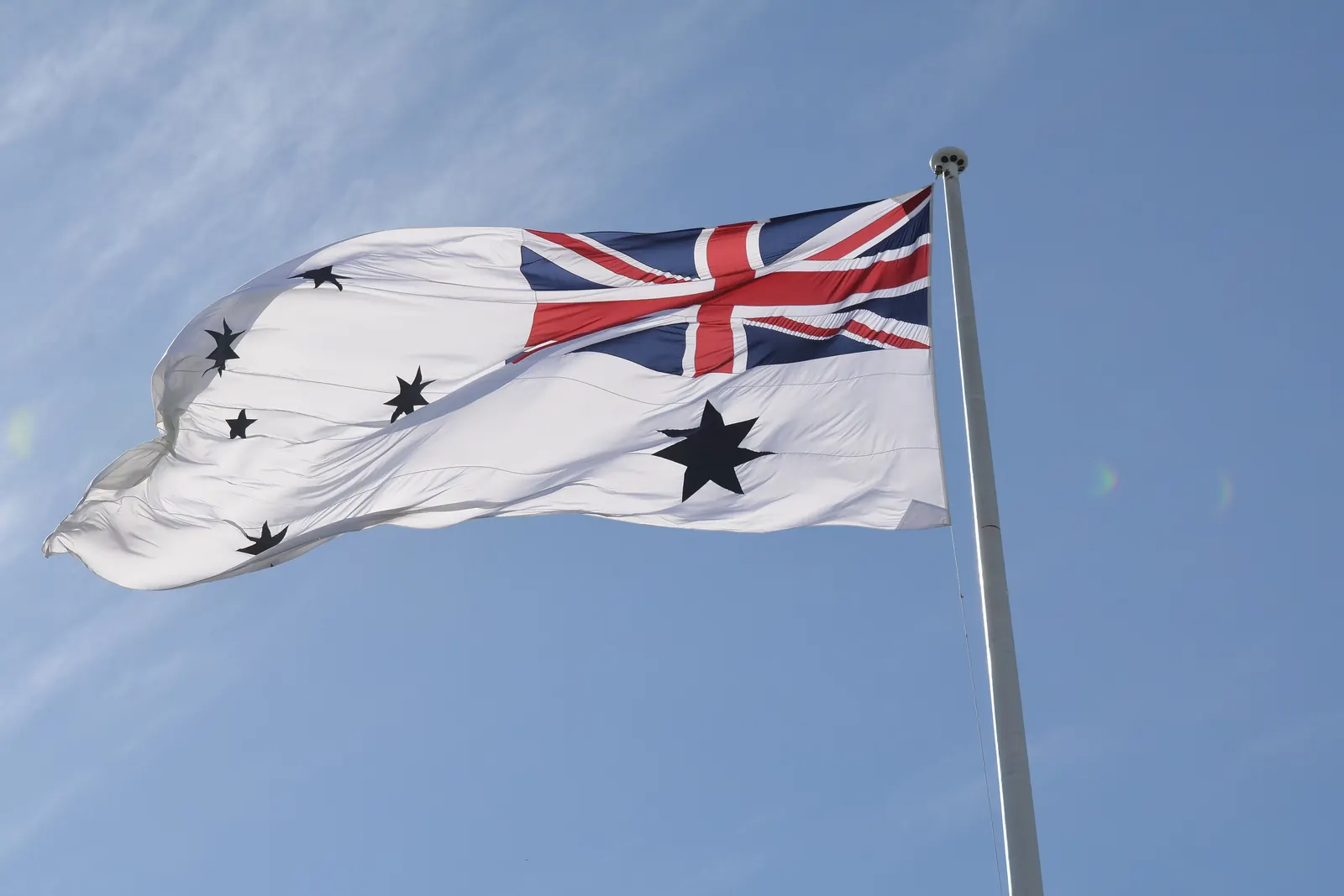
Defence ensigns
| Ensign | Used by | Adopted |
|---|---|---|
| Australian Defence Force ensign | The ADF as a whole | Proclaimed 2000 |
| Australian white ensign | Royal Australian Navy, at the stern of ships | 1967 |
| Royal Australian Air Force ensign | RAAF | 1949; kangaroo added in 1982 |
The Army has no ensign of its own; it has the ceremonial role of protector of the Australian National Flag. According to PM&C, permission is required to fly or use a Defence ensign.
Other government flags
PM&C lists further flags: the Centenary Flag, the national flag with a white headband and crimson stripe, proclaimed in 2001 and flown on ceremonial occasions; the civil air ensign of civil aviation; and the flags of the Australian Border Force and the Australian Federal Police. The King has a personal flag for Australia, approved in 2024, and the Governor-General and each state governor have their own flags.
State and territory flags
The six state flags are blue ensigns with the Union Jack and a state badge, created between 1870 and 1904:
| State or territory | Badge or design |
|---|---|
| New South Wales | Gold lion on the red cross of St George, with four stars |
| Victoria | The Southern Cross beneath a crown |
| Queensland | Crown on a light blue Maltese cross |
| South Australia | Piping shrike on a golden background |
| Western Australia | Black swan on a yellow disc |
| Tasmania | Red lion on a white disc |
| Australian Capital Territory | Blue and gold, with the Canberra coat of arms, adopted 1993 |
| Northern Territory | Black and ochre, with the Southern Cross and Sturt’s desert rose, adopted 1978 |
Norfolk Island is the only external territory with its own official flag. Other flags seen in Australia include the United Nations flag, flown on 24 October, and historical flags such as the Eureka flag, described in the guide to flagpole history. Sizes are covered in the guide to flag sizes.
Frequently asked questions
How many official flags does Australia have?
Besides the Australian National Flag and the Australian Red Ensign defined in the Flags Act 1953, the Governor-General has proclaimed further flags of Australia under the Act, among them the Australian Aboriginal Flag, the Torres Strait Islander Flag, the Australian Defence Force ensign and the Centenary Flag. The Royal Australian Navy and Air Force have their own ensigns, and each state and territory has a flag.
What is the Australian red ensign used for?
According to PM&C, the Australian red ensign is the flag flown by Australian-registered merchant ships, confirmed by the Shipping Registration Act 1981. On Merchant Navy Day, 3 September, it may also be flown on land for ceremonial purposes.
Who owns the Aboriginal flag?
The Aboriginal flag was designed by Harold Thomas and first raised in 1971. On 25 January 2022 its copyright was transferred to the Commonwealth. According to PM&C, flags, pennants, banners and bunting are made under an exclusive licence by Carroll & Richardson-Flagworld, while the public may reproduce the design freely on all other media.
Can anyone fly a Defence ensign?
No. According to PM&C, permission is required to fly or use a Defence ensign, and requests go to the relevant service. The Australian Aboriginal Flag and the Torres Strait Islander Flag, by contrast, may be flown by anyone.
Sources
This guide is based on the following sources:
- Flags Act 1953 – Federal Register of Legislation
- Australian flags – Department of the Prime Minister and Cabinet
- Australian Flags booklet – Flags of Australia’s Indigenous Peoples – Department of the Prime Minister and Cabinet
- Australian Flags booklet – Australian ensigns – Department of the Prime Minister and Cabinet
- Australian Flags booklet – State and territory flags – Department of the Prime Minister and Cabinet
- Australian Flags booklet – Royal and Vice-Regal flags – Department of the Prime Minister and Cabinet
Related guides
- Flag sizesStandard Australian flag sizes from 900 × 450 mm to 3600 × 1800 mm, the 1:2 proportions of the national flag and which size suits which flagpole height.
- The Australian flagWhat the Australian flag means: the Union Jack, the Commonwealth Star and the Southern Cross, the colours, the design in the Flags Act and its protection.
- Flag protocolThe order of precedence for flags in Australia and where each flag flies: with state flags, the Aboriginal and Torres Strait Islander flags, and on yardarms.
- Flag flying rulesThe rules for flying the Australian flag: who may fly it, hoisting times, flying at night, the dignity of the flag, disposal of old flags and commercial use.