Flags in mourning: national mourning, state funerals and coffins
Published Written by Flagpole Guides
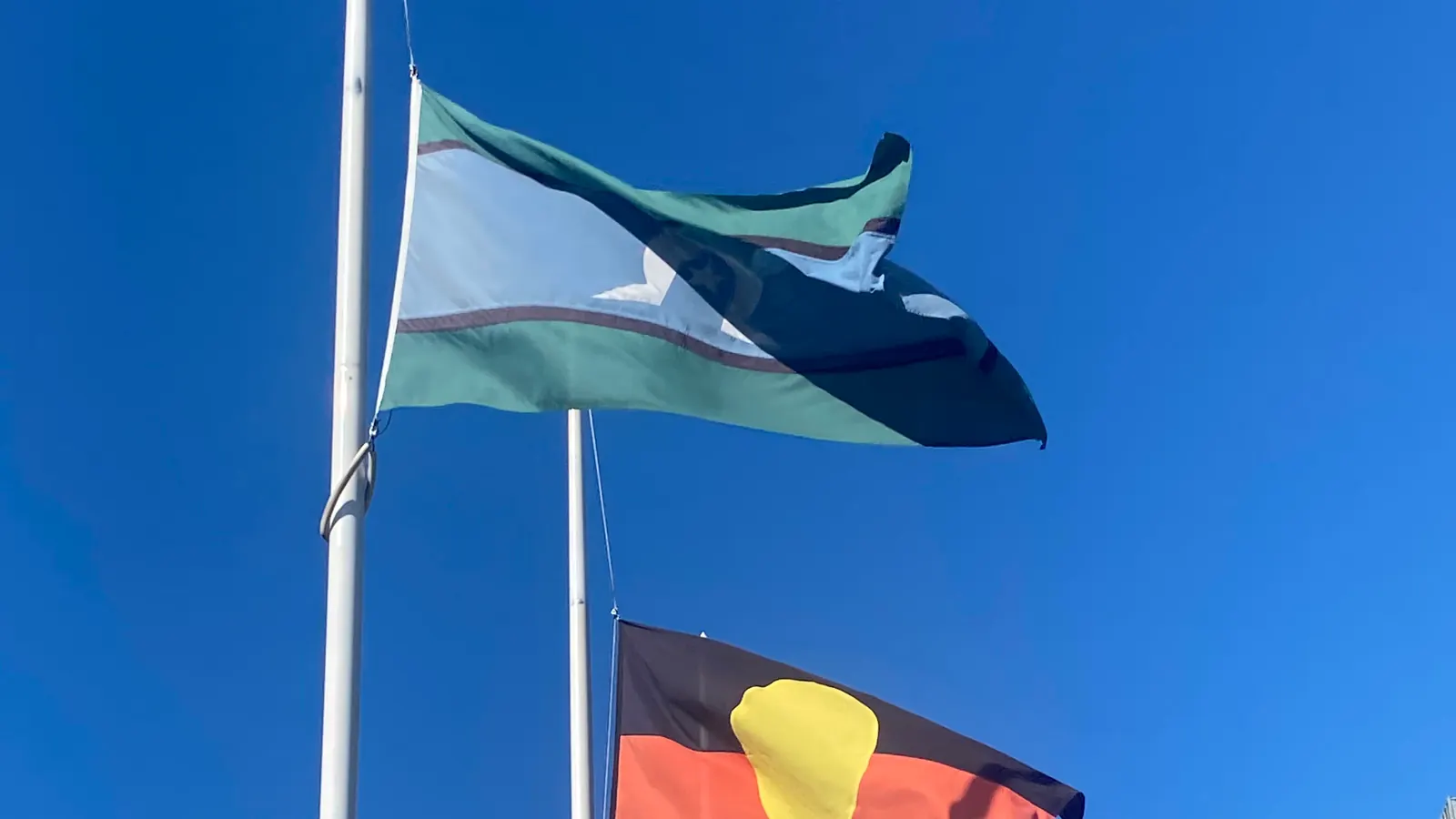
In Australia, mourning is shown mainly by flying flags at half-mast. How long and where depends on the occasion: the death of the Sovereign affects the whole country for days, a state funeral usually one state for one day, and a local death only the flags of the community concerned. The Department of the Prime Minister and Cabinet (PM&C) sets out the protocol in the booklet Australian Flags, and its Commonwealth Flag Network announces each occasion for Australian Government buildings. How the flag is lowered is described in the guide to half-mast.
The death of the Sovereign
According to the booklet, on the death of the Sovereign the flag is flown at half-mast from the announcement of the death up to and including the funeral. On the day the accession of the new Sovereign is proclaimed, it is customary to raise the flag to the top of the mast from 11 am until the usual time for closure of business.
The death of Queen Elizabeth II in September 2022 shows how this worked in practice. The Commonwealth Flag Network notices stated that:
- the Australian National Flag was flown at half-mast immediately and until further notice
- vice-regal standards remained at full mast
- flags could be flown at half-mast overnight, provided they were illuminated
- on Sunday 11 September 2022, when the Governor-General proclaimed the accession of King Charles III at Parliament House, flags flew at full mast from noon until dusk and then returned to half-mast
- on the day of the funeral, Monday 19 September 2022, flags remained at half-mast all day and returned to full mast at 8 am the following day.
National days of mourning
The Prime Minister can announce a National Day of Mourning. For Queen Elizabeth II it was held on Thursday 22 September 2022, with flags at half-mast all day and a minute of silence at 11 am. A National Day of Mourning was also held on 22 January 2026 after the Bondi Beach terrorist attack, with flags at half-mast all day across Australia and at Australian posts overseas. On such days, the notices encourage state and territory governments and other organisations to take part.
State funerals and memorial services
State and territory governments hold state funerals and state memorial services for former political leaders, veterans and other distinguished citizens. The Commonwealth Flag Network regularly asks Australian Government buildings in the state or territory concerned to fly the flag at half-mast all day on the day of the service; other organisations are welcome to participate. The notices are published on the PM&C website.
Deaths abroad and national tragedies
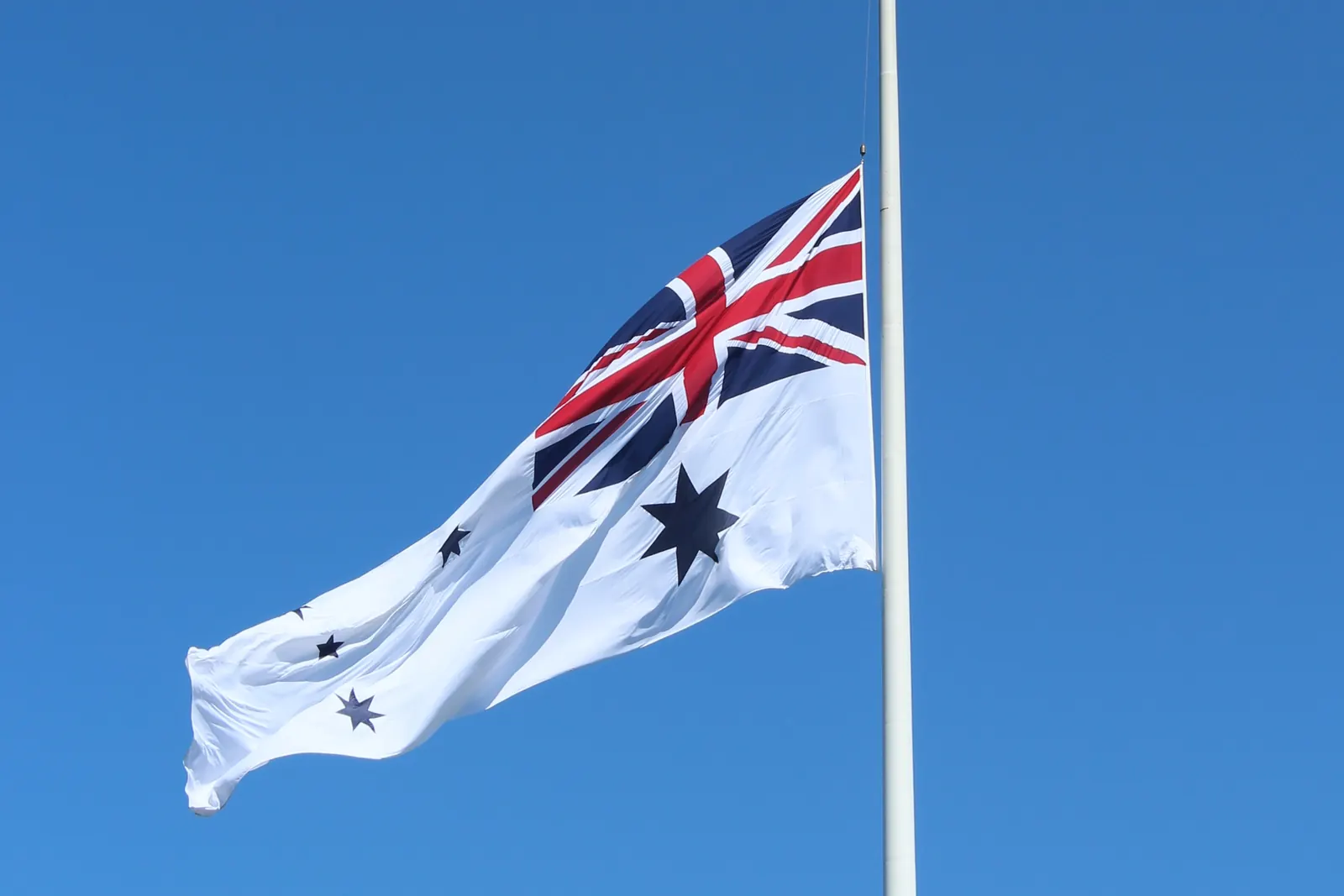
On the death of the head of state of another country with which Australia has diplomatic relations, flags are flown at half-mast on the day of the funeral or as directed, according to the booklet. The Flag Network has also asked for half-masting after national tragedies and on anniversaries requested by a state or territory, such as the anniversary of the Bombing of Darwin in the Northern Territory.
Local mourning

Not every death is a matter for the government. According to the booklet, flags in any locality may be flown at half-mast on the death of a local citizen, or on the day or part of the day of their funeral, without a direction from the Australian Government. This is how councils, schools, clubs and private flag owners mark a death in their community.
The flag on a coffin
According to PM&C, the Australian National Flag may be used to cover the coffin of any deceased Australian citizen at their funeral. The booklet describes the practice:
- The canton is draped over the “left shoulder” of the coffin, representing the heart.
- The deceased’s service headdress, sword or baton, awards or medals and family flowers may be placed on the flag.
- The flag is removed before the coffin is lowered into the grave, or at a crematorium after the service.
- Care is taken during the interment to keep the dignity of the flag.
Mourning and other flags
When flags are at half-mast, all flags in a set are flown at half-mast, according to PM&C. For flags of other nations, the notices say it is appropriate to seek permission from that nation’s diplomatic representatives. The order of flags is explained in the guide to flag protocol, and the days of national commemoration in the guide to flag days.
Frequently asked questions
How long are flags at half-mast when the Sovereign dies?
According to the Australian Flags booklet, from the announcement of the death up to and including the funeral. After the death of Queen Elizabeth II in September 2022, the Commonwealth Flag Network notices kept flags at half-mast until the day after the funeral, with flags at full mast from noon until dusk on the day King Charles III was proclaimed.
Are flags lowered for state funerals?
Often, yes. The Commonwealth Flag Network regularly asks Australian Government buildings in the state concerned to fly the flag at half-mast all day on the day of a state funeral or state memorial service. Other organisations are welcome to participate.
Can a private person lower a flag for a local death?
Yes. According to the Australian Flags booklet, flags in any locality may be flown at half-mast on the death of a local citizen, or on the day or part of the day of their funeral, without a direction from the Australian Government.
How is the Australian flag placed on a coffin?
According to PM&C, the Australian National Flag may cover the coffin of any Australian at their funeral. The canton, with the Union Jack, is draped over the left shoulder of the coffin, representing the heart, and the flag is removed before the coffin is lowered into the grave or, at a crematorium, after the service.
Sources
This guide is based on the following sources:
- Australian Flags booklet – Flying the Australian National Flag at half-mast – Department of the Prime Minister and Cabinet
- Australian Flags booklet – Draping a coffin – Department of the Prime Minister and Cabinet
- Flag announcement: Her Majesty The Queen – Department of the Prime Minister and Cabinet
- Flag announcement: Proclamation of King Charles the Third – Department of the Prime Minister and Cabinet
- Flag announcement: Her Majesty The Queen – National Day of Mourning for Australia – Department of the Prime Minister and Cabinet
- Commonwealth Flag Network – flag announcements – Department of the Prime Minister and Cabinet
Related guides
- Half-mastWhat half-mast means in Australia: how far down the flag flies, how it is raised and lowered, the rules at night and when flags are flown at half-mast.
- Flag protocolThe order of precedence for flags in Australia and where each flag flies: with state flags, the Aboriginal and Torres Strait Islander flags, and on yardarms.
- Flag daysAll days on which flying the Australian flag is encouraged in 2026 and 2027, from Australia Day and Anzac Day to NAIDOC Week and Remembrance Day.
- Flag flying rulesThe rules for flying the Australian flag: who may fly it, hoisting times, flying at night, the dignity of the flag, disposal of old flags and commercial use.