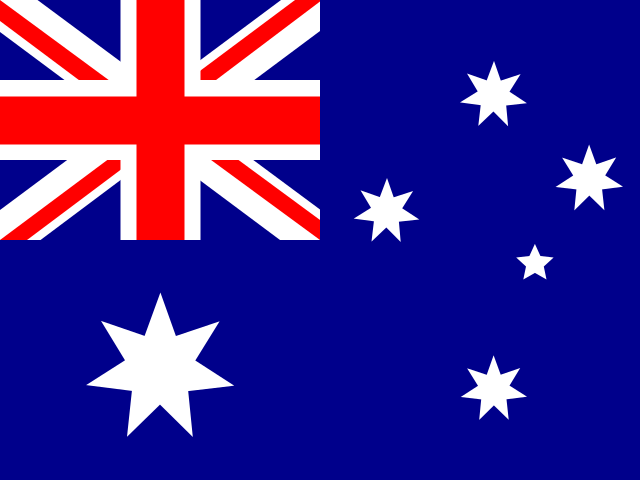
Foreign flags in Australia
Published Written by Flagpole Guides

Flags of other nations fly in Australia at embassies and consulates, hotels, international companies, sporting events and in the gardens of people with roots elsewhere. Australia has no law against flying another country’s flag. The booklet Australian Flags from the Department of the Prime Minister and Cabinet (PM&C) sets out how foreign national flags are placed when they fly together with the Australian National Flag.
The basic rules
According to the booklet:
- When the Australian National Flag is flown with the flags of other nations, all flags should, if possible, be the same size and flown on flagpoles of the same height.
- According to international practice, no national flag flies above another in peacetime.
- The Australian National Flag takes the position of honour.
- Each flag has its own flagpole; two flags are not flown from the same pole.
In the order of precedence, the national flags of other nations come directly after the Australian National Flag, ahead of the state and territory flags. More in the guide to flag protocol.
One foreign flag
When flying with only one other national flag, the Australian National Flag flies on the left of a person facing the building. When two flags are crossed, the Australian flag is on the left as seen by a person facing them, and its staff crosses in front of the staff of the other flag.
Several foreign flags
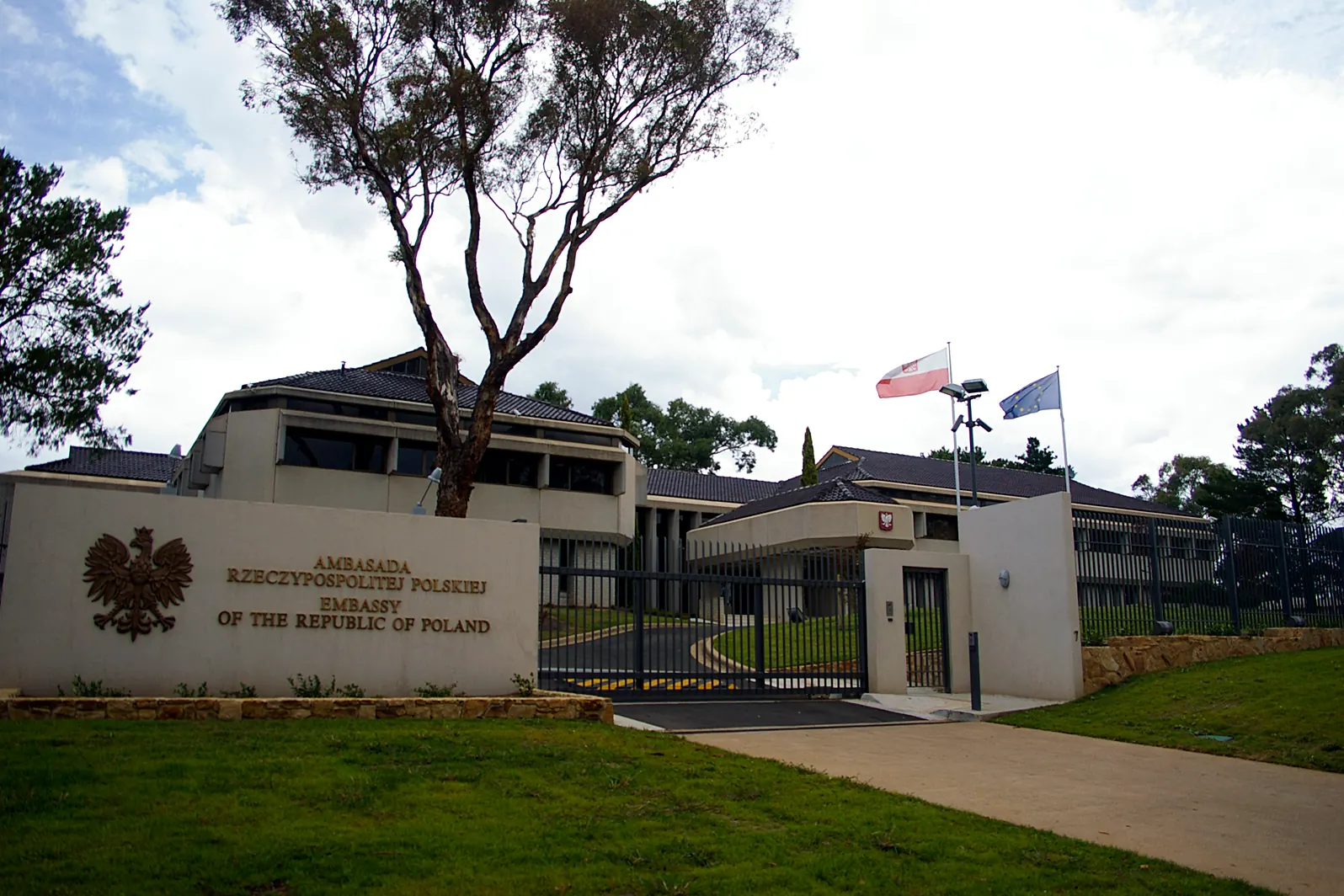
With several national flags, the booklet describes these arrangements:
| Arrangement | Position of the Australian flag |
|---|---|
| Line of flags, the others in alphabetical order | First, followed by the others alphabetically |
| Odd number of flags, one Australian flag | In the centre |
| Even number of flags, one Australian flag | On the far left of a person facing the building |
| Even number of flags, two Australian flags | One at each end of the line, on poles of uniform height |
| Semi-circle | In the centre |
| Enclosed circle | On the pole immediately opposite the main entrance |
On a flagpole with a yardarm, the Australian flag flies on the left of the yardarm and the other nation’s flag on the right, as seen from the front.
Which flags are flown
According to the booklet, the Australian Government’s policy is to fly only the official flags of nations recognised by Australia. The policy applies to the government’s own buildings; for private flag owners, it indicates official practice rather than a rule.
Conference tables and meetings
When flags of nations are placed on a conference table, a single flag representing each nation is placed in front of the leader of that country’s delegation, according to the booklet. PM&C also publishes a fact sheet on setting up flags for conferences and bilateral meetings.
Half-mast and mourning
When the Australian Government asks for flags to be flown at half-mast, all flags in a set are lowered. For flags of other nations, the Commonwealth Flag Network notices state that it would be appropriate to seek permission from the diplomatic representatives of that nation to half-mast their flag. Conversely, Australia lowers its own flag on the death of the head of state of a country with which it has diplomatic relations, usually on the day of the funeral or as directed, as it did in September 2026 after the death of King Harald V of Norway. More in the guide to flags in mourning.
Ships in port
According to the booklet, foreign vessels may, as a courtesy, fly the Australian National Flag or the Australian red ensign from the foremast when berthed in an Australian port. The rules for flags on Australian ships are set out in the Shipping Registration Act 1981.
Businesses and events
International companies, hotels and event organisers often fly several national flags in a row. The same protocol applies to them: flags of the same size, poles of the same height and the Australian flag in the position of honour. More in the guide to flagpoles for businesses.
Frequently asked questions
Can I fly another country’s flag in Australia?
Yes. No Australian law prohibits flying the flag of another nation. According to the Australian Flags booklet, the Australian National Flag takes the position of honour when it is flown with the flags of other nations, and all the flags are, if possible, the same size and on poles of the same height.
Which side does the Australian flag fly on?
When flying with one other national flag, the Australian National Flag flies on the left of a person facing the building, according to PM&C. With several national flags, the others follow the Australian flag in alphabetical order.
Can a foreign flag be flown alone?
The protocol does not forbid it. According to PM&C, the Australian National Flag takes precedence over all other flags when it is flown in company with other flags, so the question of position arises only when the flags fly together.
Is a foreign flag lowered to half-mast in Australian mourning?
The Commonwealth Flag Network notices state that, if a set of flags includes the flags of other nations, it would be appropriate to seek permission from the diplomatic representatives of that nation to half-mast their flag.
Sources
This guide is based on the following sources:
- Australian Flags booklet – Flying the Australian National Flag with other nations’ flags – Department of the Prime Minister and Cabinet
- Australian Flags booklet – Order of precedence – Department of the Prime Minister and Cabinet
- Australian Flags booklet – Use of the flags on conference tables – Department of the Prime Minister and Cabinet
- Australian Flags booklet – Flying the Australian National Flag and red ensign on ships – Department of the Prime Minister and Cabinet
- Flag announcement: His Majesty King Harald V – Department of the Prime Minister and Cabinet
Related guides
- Flag protocolThe order of precedence for flags in Australia and where each flag flies: with state flags, the Aboriginal and Torres Strait Islander flags, and on yardarms.
- Flagpoles for businessesFlagpoles for Australian businesses: company flags beside the national flag, using the flag in advertising, imports and trade marks, permits and WHS duties.
- Flag daysAll days on which flying the Australian flag is encouraged in 2026 and 2027, from Australia Day and Anzac Day to NAIDOC Week and Remembrance Day.
- Flag flying rulesThe rules for flying the Australian flag: who may fly it, hoisting times, flying at night, the dignity of the flag, disposal of old flags and commercial use.