
Flagpole repair in Australia: common faults and causes
Published Written by Flagpole Guides
Most flagpole faults have a simple cause: a rope that has worn out, a pulley that no longer turns, or a flag that has wrapped itself around the pole. More serious damage comes from corrosion, a loose base or a storm. This guide describes the common faults and what usually causes them; how the parts work is explained in the guide to how a flagpole works.
Common faults
| Fault | Usual causes |
|---|---|
| Broken halyard | Sun damage, wear against the pole or pulley, age |
| Flag stuck at the top | Halyard off the pulley, seized pulley, flag wrapped around the pole |
| Flag wrapped around the pole | Changing wind direction, fixed truck, slack halyard |
| Halyard hard to pull | Dirty or worn pulley, knotted or swollen rope |
| Rattling or slapping noise | Loose external halyard in the wind |
| Torn or frayed flag | Strong wind, a flag too large for the pole, sharp edges |
| Corrosion at the base | Water and salt collecting at the foot of the pole |
| Loose or leaning pole | Loose base plate bolts, cracked footing, worn sleeve |
| Jammed internal halyard | Counterweight caught, rope twisted inside the pole |
Halyard and pulley
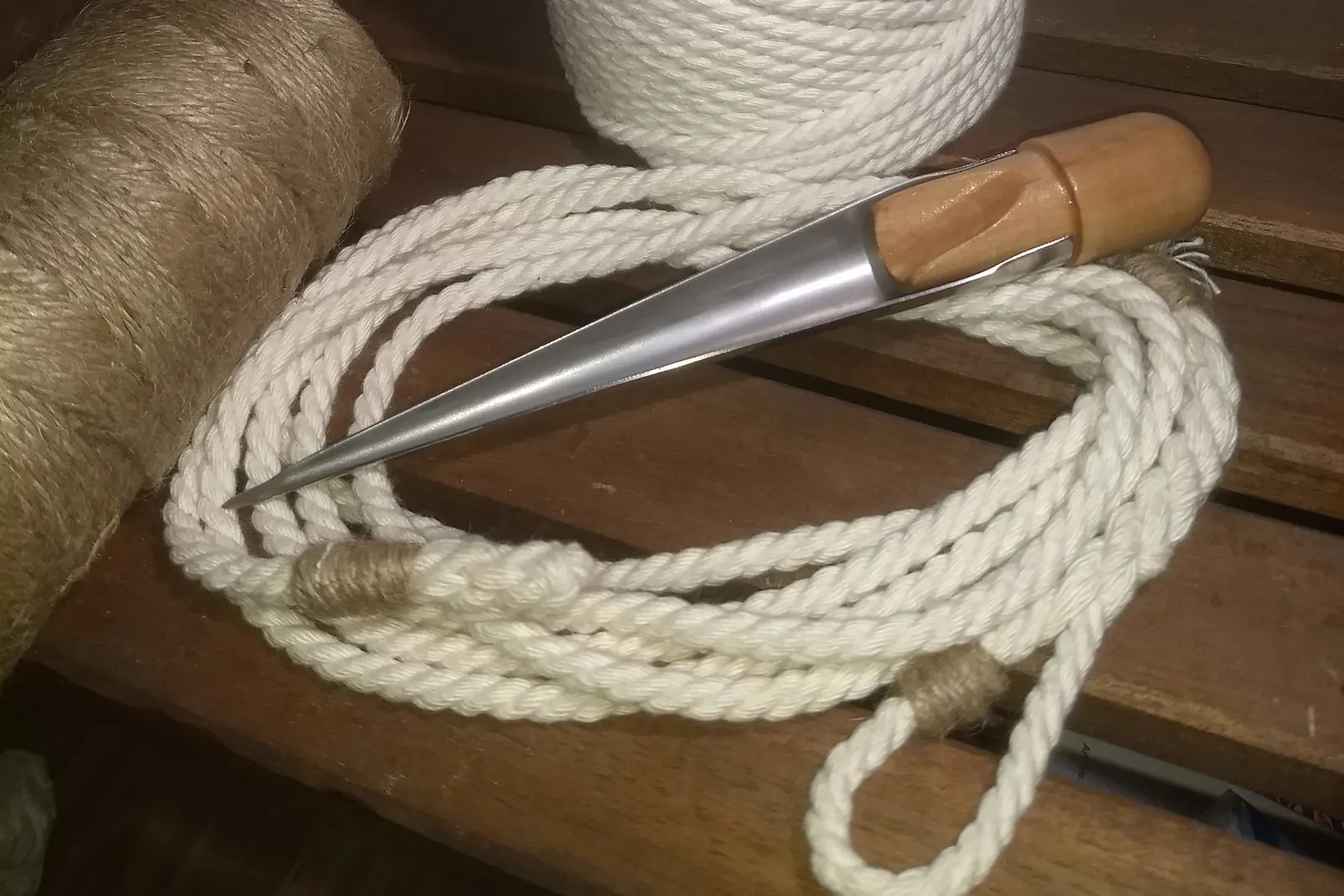
The halyard is the part that fails most often. Strong UV makes synthetic rope brittle, and wind makes it rub against the pole and the pulley. When the halyard breaks, the flag either drops or stays at the top. Replacing it on a fixed pole means reaching the truck at the top; on a hinged pole, the pole is lowered and the work is done on the ground. A seized pulley is usually a sign of dirt, corrosion or wear and can be replaced together with the truck.
Flags that wrap or tear
A flag that winds around the pole is often caught by gusty, changing winds. A revolving truck, clips that turn freely and a tight halyard reduce the problem. Tears and frayed edges come from strong wind and long exposure. According to the Australian flag maker Evan Evans, high winds, storms and prolonged UV are the biggest threats to a flag’s life. According to the Department of the Prime Minister and Cabinet, a damaged, faded or dilapidated flag should not be flown. More in the guide to flagpole maintenance.
Corrosion and damage to the finish
Aluminium poles are usually anodised or powder-coated, according to the Victorian Department of Education. Scratches and chips in the coating, and water collecting at the base, let corrosion start, and salt air near the coast speeds it up. Steel fittings on an aluminium pole can also corrode where the two metals meet. Small damage to the finish can be touched up; deep corrosion at the base weakens the pole.
Base and footing
A pole that leans or moves has a problem at the base: loose bolts on a base plate, a cracked concrete footing or wear in the sleeve. After a storm, such a pole is at risk of falling. On a hinged base, the hinge and its locking bolts are checked for wear.
Repair or replace?
Replaceable parts, such as the halyard, clips, pulley, truck, finial and internal halyard door, are usually repaired or swapped. A pole that is bent, cracked or corroded through at the base is usually replaced, because its strength in the wind can no longer be relied on. If a new pole or part fails early, the consumer guarantees under the Australian Consumer Law apply, according to the ACCC.
Safety during repairs
Most repairs involve the top of the pole. According to Safe Work Australia, work at height is done from the ground or a solid construction where possible, then from a fall prevention device such as an elevating work platform, and construction work with a risk of falling more than 2 metres is high risk construction work. More in the guide to flagpole safety, and replacement parts in the guide to flagpole accessories.
Frequently asked questions
What is the most common flagpole fault?
A worn or broken halyard. Sun and wind wear the rope, and when it breaks, the flag either falls or stays stuck at the top. Replacing the halyard on a fixed pole means working at the top of the pole or using an elevating work platform.
Why is the flag stuck at the top?
Usually because the halyard has jumped off the pulley, the pulley has seized, or the flag or halyard has wrapped around the pole or the truck. On a pole with an internal halyard, a jammed counterweight can have the same effect.
Can a damaged flagpole be repaired?
Many faults can be. Halyards, pulleys, trucks, finials and clips are replaceable parts. A pole that is bent, cracked or badly corroded at the base is usually replaced, since its strength in the wind cannot be relied on.
Who repairs flagpoles?
Flagpole suppliers and installers usually offer repairs and spare parts. At workplaces, work at height is subject to the Work Health and Safety laws, and Safe Work Australia states that work is done from the ground or a solid construction where possible.
Sources
This guide is based on the following sources:
- Working at heights – Safe Work Australia
- Flags and patriotic ceremonies – Flagpoles – Department of Education, Victoria
- Australian Flags booklet – Dignity of the flag – Department of the Prime Minister and Cabinet
- Consumer rights and guarantees – Australian Competition and Consumer Commission
- Flag care and etiquette – Evan Evans
Related guides
- Flagpole maintenanceFlagpole and flag maintenance in Australian conditions: checking the pole, base and halyard, sun and salt air, washing, drying and storing flags, and old flags.
- How a flagpole worksHow a flagpole works: the halyard and pulley, internal and external halyards, raising briskly and lowering with dignity, gaffs and the hinged base.
- Flagpole accessoriesThe parts of a flagpole explained: truck and pulley, finial, halyard, clips, cleat, internal halyard hatch, yardarm, base and lighting, as used in Australia.
- Lifespan and sustainabilityHow long flagpoles and flags last in Australian sun, wind and salt air, what shortens their life, rotating flags, and how old flags and poles are disposed of.