Flag sizes in Australia: what size flag for a flagpole?
Published Written by Flagpole Guides
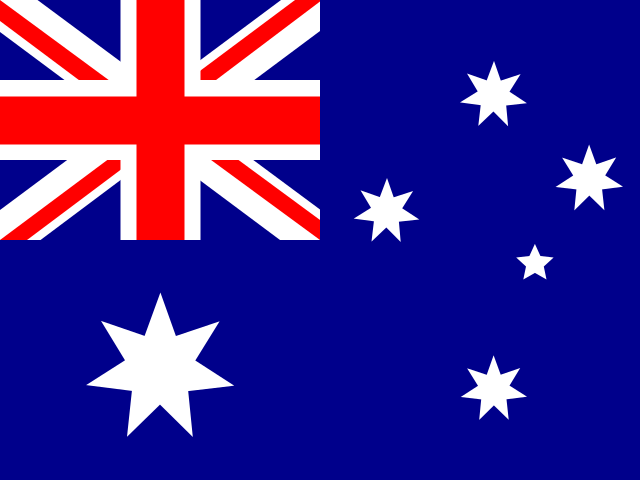
No law in Australia says how large a flag has to be. The Flags Act 1953 describes the design of the Australian National Flag and gives the size and position of its stars as fractions of the flag’s width, but it leaves the overall size to the maker and the flag owner. The sizes sold in Australia follow a set of standard dimensions, and Australian flag makers publish guides that link them to the height of the flagpole.
The proportions
The Australian National Flag is made in the proportions 1:2: the flag is twice as long as it is high. According to PM&C, the flag flying over Parliament House in Canberra measures 12.8 by 6.4 metres, and the first Australian flag, raised over the Exhibition Building in Melbourne in 1901, measured 5.5 by 11 metres. The Aboriginal flag is designed in proportions approximating 1:2 as well, according to PM&C.
Standard sizes
The standard outdoor sizes are given in millimetres as length × height. The table lists the sizes and the flagpole heights they are matched with in the size guide of Evan Evans, an Australian printer and flag maker:
| Flag size (length × height) | Flagpole height |
|---|---|
| 900 × 450 mm | up to 3 m |
| 1370 × 685 mm | 4.5 m |
| 1800 × 900 mm | 6 m |
| 2300 × 1150 mm | 7.5 m |
| 2750 × 1380 mm | 9 m |
| 3200 × 1600 mm | larger poles |
| 3600 × 1800 mm | 12 m |
According to Evan Evans, 1800 × 900 mm on a 6 metre pole is the most common outdoor size, used by schools, businesses and community sites. Smaller flags on short poles are common for homes and clubs, and indoor presentation flags on 1.2 to 2.4 metre poles use the smaller sizes.
The one-third rule
Another Australian flag maker, Flags Fantastic, gives the general rule that the longest length of the flag is close to one third of the length of an in-ground flagpole: a 6 metre pole flies a 1.8 × 0.9 metre flag, a 9 metre pole a 2.7 × 1.37 metre flag. For wall-mounted poles and short poles on buildings, the flag may be larger than one third of the pole, in proportion to its height above the ground. Evan Evans gives a common guide of one quarter to one third of the pole’s height. The flag size calculator applies both.
Size and protocol
The PM&C protocol adds rules for flags flown together:
- The Australian National Flag is not smaller than any other flag flown with it.
- With the flags of other nations, all flags are, if possible, the same size and on poles of the same height.
- On United Nations Day, the UN flag flown beside the Australian flag is the same size.
Size and permits
In New South Wales, the exempt development code limits the flag on a free-standing flagpole that needs no approval to an area of 2.5 square metres, and the flag must not be used for advertising. A 1800 × 900 mm flag has an area of 1.62 square metres; a 2300 × 1150 mm flag has 2.65 square metres. Other states set limits on the pole rather than the flag. More in the guide to installing a flagpole.
Size, wind and weather
A larger flag catches more wind and loads the pole more. According to Evan Evans, a smaller size or a more durable material can suit exposed or coastal sites, and flags are best lowered during severe weather. The manufacturer’s maximum flag size for a pole is part of the picture too. More in the guides to flagpole heights and flagpole safety; how the flag sits at half-mast is in the guide to half-mast.
Frequently asked questions
What size flag goes on a 6 metre flagpole?
In the size guides of Australian flag makers, a 6 metre in-ground flagpole carries a 1800 × 900 mm flag, which Evan Evans describes as the most common outdoor Australian flag size. It follows the rule of thumb that the flag’s length is close to one third of the pole’s height.
What are the proportions of the Australian flag?
The Australian National Flag is made in the proportions 1:2, so the flag is twice as long as it is high. The flag flying over Parliament House in Canberra, for example, measures 12.8 by 6.4 metres, according to PM&C.
Is there an official rule on flag size in Australia?
No. The Flags Act 1953 sets out the design of the flag and the position and size of the stars in relation to the flag’s width, but not how large a flag has to be for a flagpole. The PM&C protocol only states that the Australian flag should not be smaller than any other flag flown with it.
Are all flags in a group the same size?
When the Australian National Flag is flown with the flags of other nations, all flags should, if possible, be the same size, according to PM&C. With state, company or club flags, the Australian flag is not smaller than any of the others.
Is there a limit on flag size for a flagpole without a permit?
In New South Wales, yes. Under the state’s exempt development code, a flag flown from a free-standing flagpole that needs no approval must not have an area of more than 2.5 square metres and must not be used for advertising.
Sources
This guide is based on the following sources:
- Flags Act 1953, Schedule 1 – Federal Register of Legislation
- Australian National Flag fun facts – Department of the Prime Minister and Cabinet
- Australian Flags booklet – Flying and handling – Department of the Prime Minister and Cabinet
- Australian flag size guide – Evan Evans
- Choosing the right flag – Flags Fantastic
- State Environmental Planning Policy (Exempt and Complying Development Codes) 2008, clause 2.40 – NSW Legislation
Related guides
- Flag size calculatorThe flag size calculator shows the flag length for a flagpole by the flag makers’ rule of thumb, the size at 1:2 and the nearest standard Australian size.
- Flagpole heightsHow tall a flagpole can be in Australia without a permit, state by state, the common heights of 4.5 to 9 metres and how pole height and flag size go together.
- Flag typesThe official flags of Australia: the national flag, the red ensign, the Aboriginal and Torres Strait Islander flags, Defence ensigns and state flags.
- Half-mastWhat half-mast means in Australia: how far down the flag flies, how it is raised and lowered, the rules at night and when flags are flown at half-mast.